
Smooth false indigo
Amorpha glabra
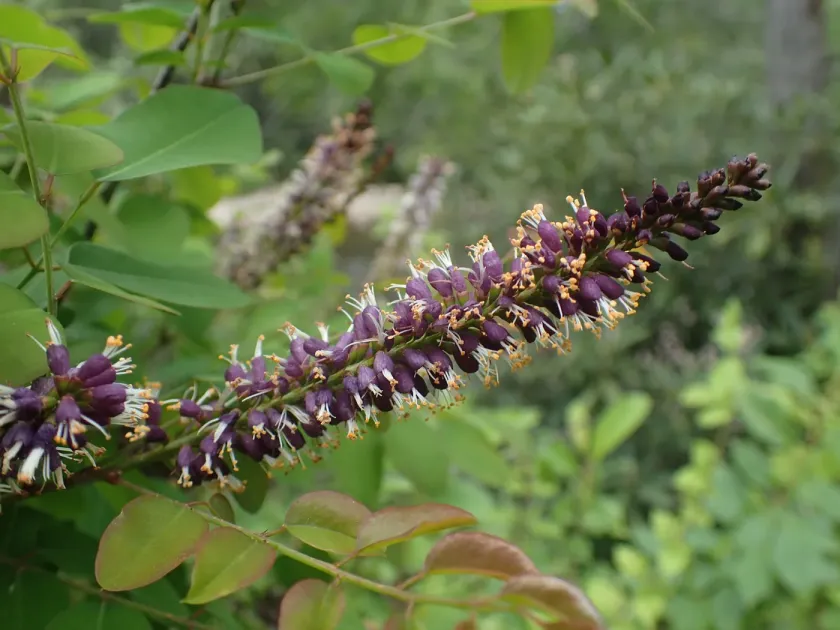
Description
Growing requirements
Amorpha glabra, known as the smooth false indigo, is a deciduous shrub belonging to the Fabaceae family. It is native to the southeastern parts of North America, where it typically grows in various open habitats and woodland edges.
The plant thrives best in full sun exposure. While it can tolerate partial shade, maximum flowering and optimal structural development of the shrub are achieved when it receives at least six to eight hours of direct sunlight daily.
Regarding soil, Amorpha glabra is adaptable to different soil types, including loams and sandy soils. Good drainage is essential, as the species does not tolerate waterlogged conditions, which can lead to root system degradation.
In terms of climate, the species is relatively hardy. It is well-adapted to warm temperate conditions but may require some protection from severe frosts when cultivated in cooler regions during its establishment phase.
Cultural practices involve minimal intervention once the plant is established. However, early stage management includes regular weeding and periodic irrigation to encourage deep root formation, especially during the first growing season.
Main diseases and pests
Amorpha glabra is generally considered a low-maintenance plant with strong natural resistance to major pests and diseases. Its robust nature makes it an excellent choice for sustainable landscaping projects.
The primary concern under suboptimal conditions is fungal disease, such as powdery mildew, which can occur if airflow is poor. Improving air circulation around the shrub through selective pruning is a simple and effective preventative measure.
Insect pests such as aphids or leaf-eating caterpillars may occasionally appear. However, these are rarely significant enough to damage the overall health of an established shrub and can often be managed through natural biological controls.
Root rot remains the main threat to the plant's health, primarily occurring in heavy, poorly drained clay soils. Ensuring proper soil amendments or selecting a well-drained planting site prevents this issue entirely.
Good garden hygiene, such as removing fallen leaves and pruning damaged branches, helps maintain plant vigor and reduces the likelihood of hosting dormant pest populations during the winter season.