
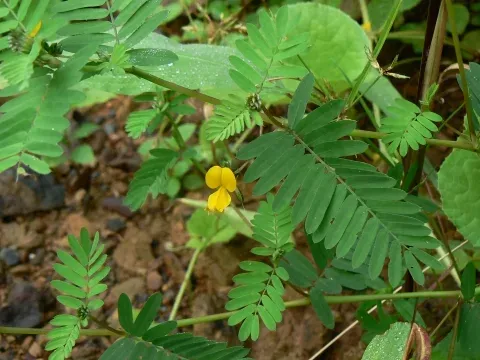
Smithia
Smithia
Smithia is a genus of flowering plants belonging to the Fabaceae family, commonly found in tropical and subtropical regions. These plants grow as annual or perennial herbs, adapting to diverse environmental niches.
What the section contains


Smithia
The optimal time for sowing is at the onset of the rainy season, ensuring adequate soil moisture for germination. Successful establishment requires a well-prepared seedbed, clear of weeds and debris.
Seeds should be sown in shallow rows, typically at a depth of 1 to 2 centimeters. Because seeds often possess a hard coat, pre-treatment may be necessary to ensure uniform germination rates across the field.
Planting density is a critical factor for canopy closure and weed suppression. Using recommended seeding rates helps maximize the ground coverage and nitrogen-fixing efficiency of the stand.
Incorporating Smithia into a crop rotation cycle serves as a biological method to enrich the soil with nitrogen. It is particularly beneficial in systems where synthetic fertilizers are to be minimized.
Smithia thrives in warm, humid climates and is highly sensitive to frost. It requires temperatures consistently above 20 degrees Celsius to maintain healthy vegetative growth throughout the season.
Soil requirements include excellent drainage and high aeration. The plant is prone to root rot in waterlogged conditions, making well-drained soils or raised beds essential for survival.
Adequate sunlight is necessary for optimal photosynthesis. While some shade can be tolerated, full sun exposure significantly increases biomass production and the formation of nitrogen-fixing root nodules.
The plant performs best in neutral to slightly acidic soils. If the soil pH is too low, agricultural lime can be applied to improve conditions for the symbiotic bacteria that inhabit the roots.
Water management is crucial during the early stages of development. Consistent moisture availability facilitates rapid root expansion, which eventually helps the plant withstand occasional dry spells.
The yield of Smithia biomass is highly dependent on environmental inputs such as water, light, and soil fertility. Under ideal conditions, the plant produces a dense foliage that is rich in proteins.
Biomass harvest is usually performed just before the onset of the flowering stage to ensure the highest nutrient content. At this point, the stems and leaves contain the most concentrated minerals.
When utilized as a forage crop, Smithia provides excellent feed for livestock due to its nitrogen-rich composition. Its rapid regeneration after cutting allows for multiple harvests in a single season.
Quantifying yield involves monitoring the growth rate and the accumulation of green matter per hectare. Regular nutrient management, particularly with phosphorus and potassium, can boost overall production.
Yield assessment is vital for calculating the economic viability of the crop in specific agro-ecological zones. Careful planning of harvest schedules ensures the crop remains profitable and sustainable.
Fungal diseases such as powdery mildew and anthracnose are significant threats to Smithia, especially during periods of high humidity. Proactive monitoring is essential to catch these infections early.
Insect pests, including aphids and various legume-specialized beetles, can cause extensive damage to foliage. Implementing biological control methods is preferred to avoid harming beneficial soil microorganisms.
Nematodes represent a hidden but serious challenge, as they affect the root system and diminish the plant’s ability to fix nitrogen. Soil testing is necessary to manage nematode levels before sowing.
Good agricultural practices, such as maintaining proper distance from other legumes and cleaning farming equipment, help reduce the spread of pathogens between plots.
Pesticide use should be highly selective. If chemical interventions are required, they must be applied at concentrations that do not negatively impact the root-nodule bacteria symbiosis.
Harvesting strategies vary based on whether Smithia is intended for green manure or livestock fodder. For green manure, the plants are incorporated into the soil before the maturation of seeds.
For fodder production, the crop should be mowed at the start of the blooming phase. Proper timing prevents the plant from becoming too fibrous, maintaining the quality of the harvested hay.
Mechanized harvesting should be performed in dry conditions to facilitate quicker drying of the harvested matter. Rapid dehydration reduces the risk of mold formation during storage.
Seed collection requires careful timing to avoid pod shattering. Harvesting should commence when the pods show the first signs of browning to maximize yield while minimizing seed loss on the ground.
Post-harvest processing includes cleaning and drying seeds to a stable moisture content. Proper storage in cool, dry conditions is essential for maintaining seed viability for future planting seasons.