
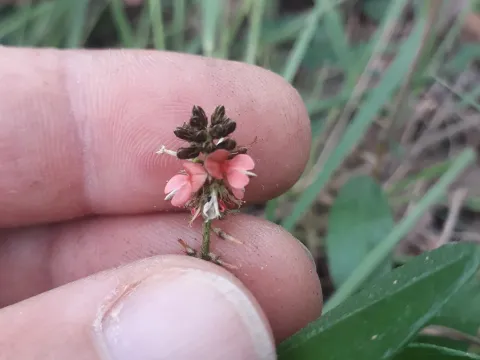
Indigofera polysphaera
Indigofera polysphaera
Sowing of Indigofera polysphaera is typically scheduled to coincide with the onset of the rainy season to provide necessary moisture for seed germination.
What the section contains
Indigofera polysphaera
Seeds should be planted at a shallow depth of 1–2 centimeters, ensuring they remain in contact with moist soil while still being able to emerge efficiently.
Mechanical scarification of the seeds is highly recommended, as the seed coat is naturally hard and requires physical intervention to break dormancy.
Row planting with spacing of about 40–60 centimeters is standard, allowing for adequate air circulation and facilitating easier management of the plantation.
Early-stage seedling care is crucial, as the plant establishes its root system and begins to develop its nitrogen-fixing capabilities shortly after emergence.
Indigofera polysphaera belongs to the Fabaceae family, making it an excellent candidate for intercropping to enhance soil nitrogen levels naturally.
The plant thrives in well-drained soils, showing a preference for sandy or loamy textures that prevent waterlogging and facilitate root aeration.
Exposure to full sunlight is essential for optimal biomass production, as the species is highly photophilous and performs poorly under dense canopy cover.
Climatic requirements focus on tropical and subtropical conditions, with a preference for stable high temperatures and distinct dry and wet cycles.
The species displays moderate drought tolerance, which allows it to persist during short dry spells that often occur in its native growing regions.
The crop is vulnerable to various insect pests, particularly lepidopteran larvae that feed on the foliage and can significantly stunt growth.
Fungal infections, such as powdery mildew and various leaf spot diseases, can become problematic during periods of excessively high humidity.
Root-knot nematodes represent a common soil-borne threat that can inhibit the effectiveness of root nodules, thereby reducing the plant's nitrogen-fixing output.
Effective management includes regular scouting of the field to identify early signs of infestation and applying targeted biocontrol measures.
- Rotation of crops to disrupt the lifecycle of soil-borne pests.
- Sanitation practices that include removing and destroying infected plant debris.
- Use of resistant varieties if available to mitigate fungal disease impact.