
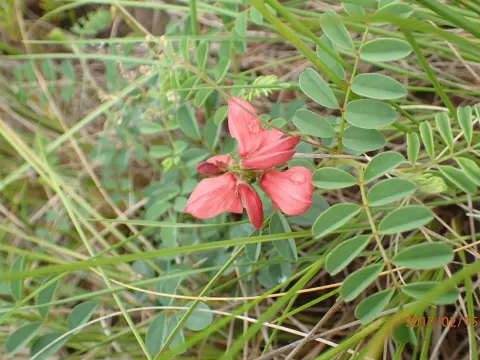
Indigofera sanguinea
Indigofera sanguinea
Indigofera sanguinea, a member of the Fabaceae family, is a versatile shrub that requires specific sowing techniques to ensure successful establishment in agricultural systems.
What the section contains
Indigofera sanguinea
Seeds should be sown in late spring when soil temperatures consistently reach 15-18 degrees Celsius, promoting rapid and uniform germination across the field.
Due to the hard seed coat characteristic of the genus, mechanical scarification or soaking in tepid water is highly recommended to accelerate the emergence of seedlings.
A sowing depth of approximately 2-3 centimeters is ideal, ensuring that seeds have sufficient contact with moist soil while being able to emerge without excessive energy expenditure.
Maintaining adequate row spacing, usually between 45 and 60 centimeters, is crucial for facilitating mechanical weeding and ensuring adequate sunlight penetration to the lower foliage.
This crop thrives in warm, temperate climates and requires full solar exposure to maximize biomass production and support the physiological development of the plant.
Well-drained sandy or loamy soils are essential for Indigofera sanguinea, as the plant is highly sensitive to waterlogging, which can lead to root degradation.
The plant demonstrates moderate drought tolerance once established, though supplemental irrigation during dry spells significantly improves the overall forage or biomass yield.
Nitrogen-fixing potential is a key characteristic, and maintaining a neutral soil pH is important to support the symbiotic relationship with beneficial soil bacteria.
Regular application of balanced fertilizers, particularly phosphorus, helps in developing robust stalks and improving the plant's structural integrity during periods of strong winds.
Root rot pathogens represent the most significant threat to this crop, particularly in fields with poor drainage or during seasons with excessive rainfall.
Insect pests such as spider mites and aphids may infest the canopy during arid conditions, necessitating integrated pest management approaches to protect the foliage.
Powdery mildew can emerge as a common concern in dense stands where air circulation is restricted, potentially reducing the overall quality of the harvested biomass.
Adhering to strict crop rotation schedules helps prevent the accumulation of soil-borne pathogens and interrupts the lifecycle of common agricultural pests.
Timely monitoring and the application of appropriate biological or chemical controls are vital for preserving crop health throughout the peak growing season.