
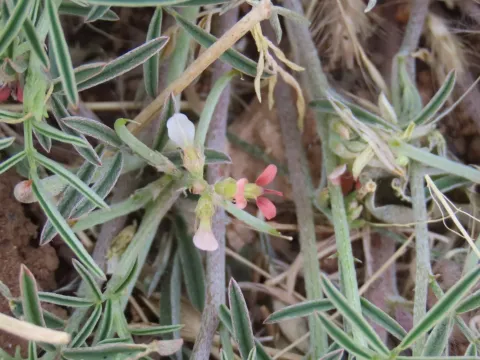
Indigofera parviflora
Indigofera parviflora
Sowing of Indigofera parviflora is generally performed at the beginning of the rainy season to ensure sufficient moisture for seed germination.
What the section contains
Indigofera parviflora
Seeds possess a hard coat, requiring scarification or soaking in warm water prior to planting to enhance the germination percentage significantly.
The optimal planting depth ranges between 1 and 2 centimeters, depending on the soil moisture content and the texture of the seedbed.
Optimal soil temperature for successful establishment lies between 20 and 30 degrees Celsius, fostering rapid development of the root system.
Proper spacing is crucial to prevent seedling competition and to ensure that the plants have adequate space for optimal vegetative growth.
Indigofera parviflora belongs to the Fabaceae family and is known for its remarkable adaptability to various marginal soil conditions.
It prefers well-lit, open areas and exhibits high drought tolerance due to its deep taproot system, which helps access water in deeper soil layers.
The plant thrives in sandy and rocky soils where nutrient levels might be insufficient for more demanding agricultural crops.
A primary agronomic value is its ability to fix atmospheric nitrogen through symbiotic relationships with Rhizobium bacteria.
It performs best in soils with a pH ranging from slightly acidic to neutral, though it can tolerate a variety of local soil conditions.
The main agricultural utility of this crop is the production of substantial green biomass, commonly utilized as a high-quality green manure.
Yield metrics for the green matter are highly dependent on rainfall distribution and the level of phosphorus availability in the soil.
In dense stands, the crop effectively suppresses invasive weed species, serving as a biological control agent for soil maintenance.
Forage yield depends on the harvest stage, with the highest nutritional density occurring shortly before the onset of flowering.
Seed yield remains relatively stable across seasons, providing reliable propagation material for future planting cycles and soil improvement efforts.
The crop can be susceptible to various root-knot nematodes, which may limit growth potential and interfere with nitrogen fixation efficacy.
Seedlings are often targeted by leaf-feeding insects, necessitating regular field monitoring during the early stages of vegetation.
High humidity or waterlogged conditions may encourage fungal pathogens, manifesting as leaf spot symptoms that can reduce overall vigor.
Effective pest management relies on balanced crop rotation practices and ensuring adequate field drainage to prevent localized disease outbreaks.
Biopesticides are recommended to control infestations while maintaining the integrity of the soil microbial community essential for plant health.
Harvesting for green manure purposes should ideally occur before the plant reaches the full pod-filling stage to maximize nitrogen content.
For seed production, the plants should be harvested when the pods are fully mature and turn brown, indicating reduced moisture levels.
Mechanized harvesting equipment can be efficiently utilized for large-scale operations to cut and incorporate the biomass back into the soil.
It is recommended to conduct harvest activities during dry conditions to ensure the quality of seeds and prevent post-harvest mold contamination.
Retention of crop residues on the soil surface is advised to provide protective cover, reducing soil erosion and improving long-term fertility.