
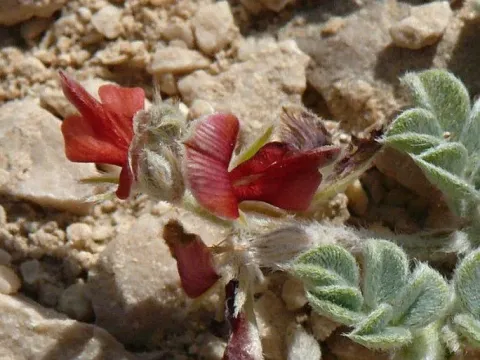
Indigofera semitrijuga
Indigofera semitrijuga
Indigofera semitrijuga is a perennial subshrub belonging to the Fabaceae family, widely recognized for its adaptability to harsh, arid, and semi-arid environments.
What the section contains
Indigofera semitrijuga
Planting typically commences at the onset of the rainy season, allowing the seeds to utilize soil moisture effectively for rapid germination and establishment.
Due to the hard seed coat, pre-sowing treatments such as scarification are highly recommended to ensure uniform field emergence and reduced dormancy.
Seeds should be sown at a shallow depth of 1 to 2 centimeters, ensuring they have sufficient soil contact and warmth to initiate development quickly.
As a legume, this species establishes symbiotic relationships with nitrogen-fixing bacteria, significantly reducing the requirement for synthetic nitrogen fertilizers in low-input farming systems.
The plant exhibits remarkable drought tolerance, making it an ideal choice for land rehabilitation and grazing in regions prone to water scarcity.
Optimal growth occurs at temperatures between +20°C and +35°C, although the species is highly sensitive to frost, which can cause severe dieback of its aerial parts.
It prefers well-drained, sandy or loamy soils, as waterlogging is detrimental to its root system and significantly increases the risk of soil-borne pathogens.
Full solar exposure is essential for photosynthesis and biomass production; shading generally stunts growth and reduces the overall yield potential of the stand.
Soil pH should ideally be neutral or slightly alkaline, as the plant manages well in degraded soils that are common in dryland agricultural zones.
The biomass yield of Indigofera semitrijuga is strongly influenced by the frequency of harvest and the availability of moisture during the growing season.
Under managed conditions with adequate moisture, the crop can support multiple cuts per year, providing a consistent source of protein-rich forage for livestock.
Its resilience allows for consistent recovery after intensive grazing, maintaining productivity over several years without the need for constant reseeding.
Harvesting is most efficient when conducted at the early flowering stage to optimize the balance between biomass volume and nutritional quality of the foliage.
Yield metrics can vary significantly based on soil fertility and management practices, yet the plant remains a staple for sustainable forage production in tropical regions.
The primary threats include fungal diseases like root rot and powdery mildew, which thrive in conditions of high humidity or insufficient field drainage.
Insects, particularly leaf-feeding beetles and caterpillars, can significantly reduce leaf area, necessitating proactive pest management and regular scouting.
Nematode infestations can damage roots, limiting water and nutrient uptake; therefore, diverse crop rotations are necessary to break pest life cycles.
Weed competition during the establishment phase is a major challenge, requiring timely weeding to prevent the young plants from being choked by fast-growing grasses.
Proper field management, including adequate spacing to ensure good air circulation, is the best strategy to mitigate the risk of pathogen spread within the canopy.