
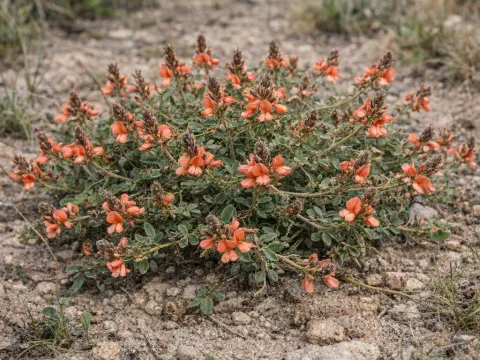
Indigofera praticola
Indigofera praticola
Indigofera praticola is a herbaceous legume species that plays a significant role in nitrogen fixation within its natural ecosystems. As a member of the Fabaceae family, it has adapted to various environmental conditions, primarily in tropical and subtropical regions where it acts as a soil builder.
What the section contains
Indigofera praticola
The plant exhibits a resilient root system that helps it survive in nutrient-poor soils. It thrives in regions with distinct dry and wet seasons, demonstrating an excellent ability to stabilize the substrate and prevent erosion on sloping landscapes.
Botanically, it is characterized by its pinnate leaves and small, dense inflorescences. The plant's morphology is geared towards optimizing transpiration control, allowing it to withstand high solar radiation while maintaining metabolic efficiency in arid environments.
Climatic requirements are specific to warm climates, as the species lacks tolerance to frost. An ideal growing season involves abundant sunlight and moderate rainfall, ensuring that the soil does not become waterlogged, which is detrimental to the development of its specialized root bacteria.
Economically, this species is increasingly valued for sustainable forage production. Its high protein content makes it an excellent supplement for livestock, while its role as a green manure contributes to the reduction of synthetic nitrogen fertilizers in integrated farming systems.
The most common threat to Indigofera praticola plantations is the onset of soil-borne fungal pathogens, especially in environments with poor drainage. Root rots and collar rots are prevalent when moisture levels exceed the plant's capacity for transpiration.
Pest pressure is frequently driven by leaf-chewing insects such as beetles and larvae of various Lepidoptera species. These insects can defoliate entire patches if left unchecked, causing a rapid decline in biomass production and overall plant health.
Fungal leaf spots represent another common problem, usually emerging during periods of high humidity and prolonged rainfall. These infections primarily impact the lower canopy, but can spread rapidly upwards if air circulation is inadequate within the planting rows.
Management strategies involve rigorous crop rotation schedules to break the lifecycle of soil-borne pathogens. Furthermore, maintaining appropriate plant density is crucial to ensure adequate airflow and sunlight penetration, which helps in keeping the leaves dry and disease-free.
Biocontrol agents are highly recommended over synthetic broad-spectrum pesticides to preserve the delicate balance of beneficial microorganisms. Sustainable agronomic practices should focus on maintaining soil health and using organic amendments to bolster the plant's natural resistance.