
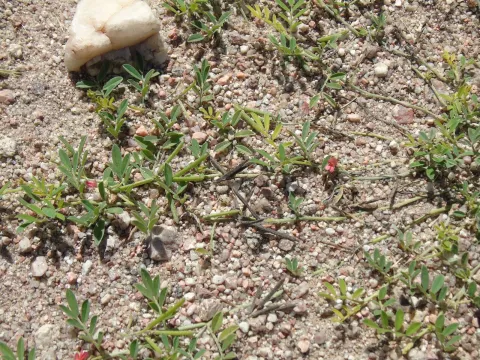
Indigofera parodiana
Indigofera parodiana
Sowing of Indigofera parodiana is conducted in warmed soil after the end of spring frosts. Successful seed germination requires a stable soil temperature between 15 and 18 degrees Celsius.
What the section contains
Indigofera parodiana
The optimal sowing depth ranges from 1.5 to 2.5 centimeters depending on soil texture and moisture levels. Scarification of the seeds prior to planting is recommended to increase germination energy and uniformity.
Row spacing in commercial production typically ranges from 45 to 60 centimeters to provide adequate space for growth. Seedlings generally emerge within 10 to 14 days under proper irrigation conditions.
During the first year, the crop develops slowly as it establishes its root system; therefore, weed control is critical during the initial growth phase. The plant is capable of effective symbiosis with nitrogen-fixing bacteria.
The seeding rate depends on the intended purpose; for biomass production, it is typically around 12-15 kg per hectare. Precision planters are recommended to minimize seed waste and ensure uniform distribution.
Indigofera parodiana is a heat-loving plant that performs best in temperate to tropical climates. Once established, it demonstrates high tolerance to drought conditions, making it resilient in dry environments.
The crop requires well-drained loamy or sandy soils with a neutral to slightly acidic pH. The plant is extremely sensitive to waterlogging, which significantly increases the risk of root rot diseases.
Sunlight is a key factor in development; the plant requires full sun to accumulate essential nutrients and achieve healthy flowering. Productivity decreases significantly in shaded or low-light conditions.
Agronomic management includes regular inter-row cultivation, especially during early growth stages. This practice suppresses weeds and improves soil aeration, which stimulates the activity of beneficial root nodules.
The plant has moderate mineral fertilizer requirements, though phosphorus and potassium applications at the budding stage significantly improve forage quality. Nitrogen fertilization is rarely necessary due to the plant's nitrogen-fixing capabilities.
The biomass yield of Indigofera parodiana depends on regional climatic conditions and management intensity. Under favorable conditions, the crop can provide up to three harvests per growing season.
The total dry matter yield can reach high levels, making it a promising forage candidate. Protein content in the biomass remains consistently high if the crop is harvested at the early flowering stage.
Biomass accumulation increases significantly during the second and third years of growth as the root system matures. Stable production can be sustained for 4 to 6 years with proper field management.
Secondary production includes seed harvest, yielding between 300 and 500 kg per hectare. Proper timing of the harvest is essential to manage pod moisture and prevent seed shattering in the field.
Overall productivity is directly correlated with plant density. An optimal number of stems per square meter ensures the highest output of nutrients for livestock or soil improvement.
Fungal diseases are the primary threat to Indigofera parodiana, particularly in high-humidity conditions. Powdery mildew may affect the leaves, reducing photosynthetic efficiency and overall plant vigor.
Pests such as weevils and spider mites can damage vegetative parts during hot, dry periods. Regular scouting and early intervention are necessary to manage localized infestations effectively.
Root rot is the most dangerous pathogen, commonly appearing in heavy or poorly drained soils. These infections lead to stand thinning and reduced longevity of the entire planting area.
Weed control is a vital protective measure, as the crop competes poorly with aggressive weeds. Herbicide applications must be highly selective to avoid damage to the legume crop.
Disease prevention is best achieved through strict crop rotation and controlled irrigation regimes. Using high-quality, treated seeds significantly reduces the risk of soil-borne pathogen introduction.
Harvesting for biomass is performed during the peak flowering period when nutrient density is at its maximum. Delaying the harvest leads to stem lignification and a decrease in nutritional value.
If utilized as hay or silage, the mown biomass should be dried rapidly to a moisture content of 15-18%. This process prevents spoilage and mold growth, ensuring long-term nutrient stability.
Harvest mechanization is typically achieved with standard mower-conditioners, which accelerate moisture loss from the stems. Conditioning is essential for producing high-quality fodder.
Seed harvesting requires a two-stage process or direct combining followed by post-harvest processing. The harvest should occur when the lower pods turn brown and seeds harden.
Post-harvest stubble can be incorporated into the soil as green manure. This practice increases organic matter content and biological nitrogen, improving the overall structure of the arable layer.