
Indigofera miniata
Indigofera miniata
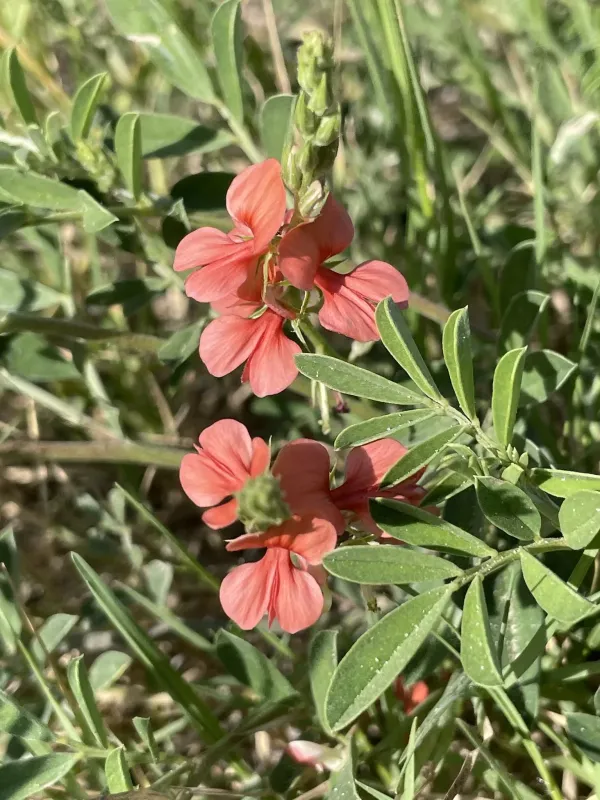
Description
Sowing dates
Indigofera miniata, commonly known as coastal indigo, is a perennial herbaceous plant belonging to the Fabaceae family. This species is recognized for its ability to thrive in challenging environments, particularly in sandy coastal soils and arid prairie landscapes.
The plant originates from the southern regions of North America, where it is well-adapted to hot and dry climates. It exhibits significant ecological resilience, making it a valuable subject for land restoration and soil stabilization projects in semi-arid zones.
Botanically, it features pinnate leaves and small, distinctive pea-like flowers that attract various pollinators. The plant's ability to form symbiotic relationships with nitrogen-fixing bacteria enhances soil fertility, providing a natural enrichment of the growing environment.
This species is highly drought-tolerant, utilizing a deep taproot to access water in deeper soil layers. These characteristics make it a key component in maintaining biodiversity in native grasslands and supporting natural forage cycles for local wildlife.
Economically, Indigofera miniata is valued for its potential in erosion control and as a nectar source for bees. Its perennial nature allows it to provide stable ground cover, which prevents soil degradation in exposed or disturbed agricultural landscapes.
Growing requirements
Optimal growth for Indigofera miniata requires well-drained, sandy, or loamy soil textures. The species is highly sensitive to waterlogged conditions, which can quickly lead to root rot and significant plant mortality if the drainage is inadequate.
The plant requires full sun exposure to flourish and maintain its metabolic processes. Areas shaded by larger vegetation or dense canopy cover will likely result in stunted growth and poor flower development, impacting seed production efficiency.
Agronomic management should prioritize low-disturbance cultivation techniques to protect the integrity of the soil structure. Since the plant is an efficient nitrogen fixer, traditional synthetic nitrogen fertilization is generally unnecessary and potentially counterproductive.
Soil pH levels should ideally be maintained within a neutral to slightly alkaline range to support bacterial activity in the root nodules. Monitoring soil acidity is crucial in areas where industrial or intensive agricultural runoff may have altered the chemical composition.
Weed management is critical during the seedling stage, as the plant initially grows slowly and can be easily outcompeted by aggressive grasses or invasive species. Regular mechanical weeding during the establishment phase ensures long-term crop success.
Main diseases and pests
The primary threats to Indigofera miniata include fungal pathogens such as powdery mildew, which thrive in environments with poor air circulation or excessive humidity. Ensuring proper plant spacing can help reduce the prevalence of these diseases significantly.
Insect pests, including aphids and seed weevils, often target the plant's succulent foliage and reproductive structures. Integrated pest management strategies, focusing on biological controls, are recommended to maintain population balance without harming native pollinators.
Root-related diseases are frequently linked to over-irrigation or soil compaction. Preventing these conditions through proper land preparation and site selection is the most effective approach for ensuring the longevity of the perennial stands.
Caterpillars of certain butterfly species can cause localized defoliation. While minor damage is often tolerated, significant outbreaks may require intervention to prevent excessive loss of photosynthetic surface area during the peak growing season.
Nematode infestations can interfere with nutrient uptake, leading to reduced vigor and stunted development. Practicing crop rotation and avoiding the planting of host species in the same soil patch are vital for preventing the buildup of harmful soil pathogens.