
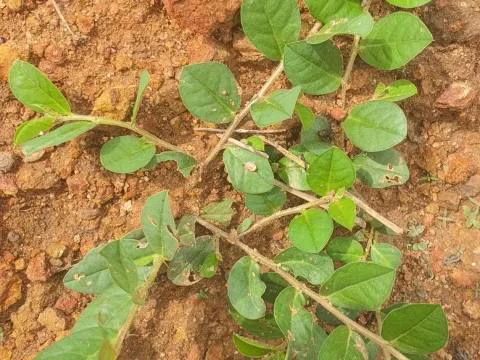
Indigofera nummulariifolia
Indigofera nummulariifolia
Indigofera nummulariifolia is a prostrate perennial legume widely recognized for its soil-binding properties and ability to improve soil fertility. It belongs to the Fabaceae family and is valued as a hardy plant suitable for various agricultural systems.
What the section contains
Indigofera nummulariifolia
The optimal sowing time aligns with the arrival of the wet season in tropical areas or late spring in temperate regions. Soil temperatures must be consistently above 20°C to ensure rapid germination and successful establishment of the seedlings.
Due to the hard seed coat, pre-sowing treatments such as mechanical scarification or short-term soaking in warm water are highly recommended. These practices significantly improve the uniformity and percentage of successful seed germination.
Seeds should be sown at a shallow depth to facilitate easy emergence. Proper seedbed preparation is essential to eliminate weed competition during the critical first few weeks after sowing, allowing the legume to establish its root system.
Row planting is preferred over broadcasting to manage plant density effectively. A dense canopy prevents soil erosion and suppresses the growth of competitive weeds, making it an excellent choice for integrated land management.
This species thrives in full sunlight, which is necessary for maximizing photosynthetic activity. Insufficient light levels often result in weak growth and reduced nitrogen-fixation efficiency in the root nodules.
The plant is highly adaptable to drought conditions once it has fully matured. Its deep root system allows it to withstand extended periods without rainfall, making it resilient in regions prone to seasonal water shortages.
Well-drained sandy or loamy soils are ideal for the development of Indigofera nummulariifolia. It performs poorly in heavy, waterlogged clay soils, which can lead to root rot and diminished vigor due to the lack of oxygen.
The plant thrives in soil with a pH ranging from slightly acidic to neutral. In nutrient-deficient soils, the plant acts as a pioneer species, contributing to soil recovery through its symbiotic nitrogen-fixing abilities.
Basic agronomic maintenance includes soil aeration and, in some cases, the application of phosphorus to support root development. Since it is a legume, nitrogen fertilizer is generally unnecessary and could even inhibit natural nitrogen fixation.
Despite its robustness, the plant can be susceptible to fungal diseases such as leaf spot or powdery mildew, especially during periods of high humidity and poor ventilation within the canopy.
Insect pests, including various species of aphids and caterpillars, may target the foliage during active growth phases. Regular monitoring is essential to prevent large-scale damage that could stunt overall productivity.
Root-knot nematodes can occasionally pose a threat in warmer climates if the field has not been properly rotated. Integrated pest management strategies, such as crop rotation, are crucial to maintaining soil health.
Competition from aggressive grass weeds remains a primary challenge for young crops. Maintaining a clean field during the early stages of growth is the most effective way to avoid serious crop losses.
Preventative measures, such as selecting resistant cultivars and maintaining optimal planting spacing, significantly reduce the risk of outbreaks. Chemical control should be used as a last resort to preserve beneficial microbial populations.
When used as a green manure, the crop should be harvested or incorporated into the soil during the full flowering stage. This timing ensures the highest biomass turnover and maximum nitrogen release into the soil.
For forage purposes, the harvest should be completed before the plants become overly woody. Early cutting provides more digestible material for livestock, though caution should be exercised regarding potentially toxic secondary metabolites.
Seed harvesting requires precision timing to prevent shattering, as the pods naturally split when fully dry. Harvesting should occur as soon as the pods turn brown but before they start dehiscing on the plant.
Post-harvest management of residues is important for long-term soil structure. Leaving the plant debris on the field surface acts as mulch, protecting the soil from sun exposure and reducing evaporation rates.
Proper drying and storage of the harvested forage are vital to prevent fungal growth. Ensuring moisture levels remain low during storage preserves the nutritional quality of the plant for future use.