
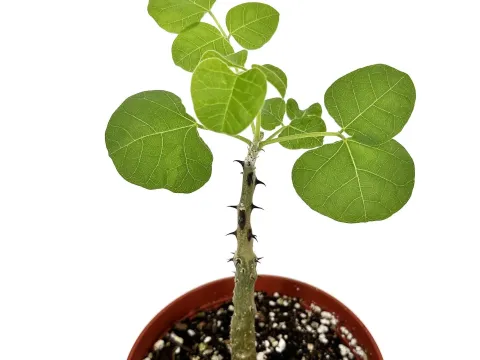
Erythrina melanacantha
Erythrina melanacantha
Sowing of Erythrina melanacantha seeds is ideally performed in the spring season when soil temperatures remain consistently high. The species requires stable warm conditions for successful germination, as cold soil may cause the seeds to rot before they sprout.
What the section contains
Erythrina melanacantha
Pre-sowing treatment is essential due to the tough, protective seed coat characteristic of many legumes. Mechanical scarification combined with overnight soaking in warm water significantly improves the uniformity and speed of germination.
Seeds should be planted at a depth of 1–2 cm in a well-draining, sandy-loam substrate. It is crucial to maintain high humidity around the seeds during the first weeks, which can be achieved using propagation trays or controlled greenhouse conditions.
Once seedlings reach a stage with three or more true leaves, they should be carefully transplanted into larger individual containers. During this phase, it is vital to minimize root disturbance to ensure healthy establishment of the young plant.
Acclimatization to direct sunlight should be handled gradually to prevent leaf scorching. Over a period of two weeks, the young plants should be moved from shaded conditions to full sun exposure to harden the stems and promote robust growth.
Erythrina melanacantha, a member of the Fabaceae family, is native to the arid and semi-arid regions of East Africa. It is a heliophytic plant, meaning it requires full, direct sunlight to thrive and produce its signature floral displays.
The plant demands extremely well-draining soil to prevent root asphyxiation. In a controlled cultivation environment, a mixture of potting soil, coarse sand, and perlite provides the necessary structure and porosity for the roots to develop properly.
Watering requirements follow a seasonal pattern. During the active growth season, regular watering is needed, but the substrate must be allowed to dry out significantly between applications to mimic the plant's natural environmental cycles.
Temperature tolerance is limited; the plant is not frost-hardy and will suffer structural damage if exposed to freezing temperatures. In temperate climates, it must be grown as a container plant and moved indoors or into a greenhouse before the first autumn frost.
Fertilization should be balanced, with a focus on phosphorus and potassium rather than nitrogen to encourage woody stem development and flower production. Over-fertilization with nitrogen can lead to succulent growth that is susceptible to pests.
Spider mites are the most frequent pests affecting Erythrina melanacantha, especially in environments with low air humidity. They thrive on the undersides of leaves, and their feeding activity can quickly lead to leaf discoloration and senescence.
Mealybugs are another common threat, often gathering in the leaf axils and along the branches. Their presence can be identified by the white, cottony substance they produce; early intervention with insecticidal soaps is typically effective.
Root rot, driven by Phytophthora or Pythium species, remains the most dangerous threat to the plant's survival. This is almost exclusively caused by overwatering or soil mixes that do not allow for rapid drainage after irrigation.
Fungal leaf spot diseases can occur during periods of high humidity and poor air circulation. Removing affected foliage and improving ventilation is the primary strategy to prevent the disease from spreading throughout the canopy.
Scale insects can occasionally infest the thicker stems of mature plants. These insects are best managed through physical removal using a soft brush followed by an application of horticultural oil to prevent the colonization of young crawlers.