
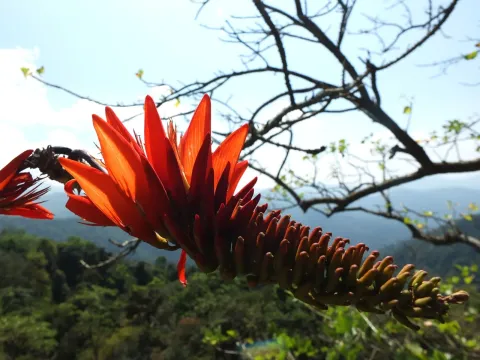
Erythrina stricta
Erythrina stricta
Erythrina stricta, commonly known as the upright erythrina, is a deciduous tree belonging to the Fabaceae family. It is native to tropical forests in India, Myanmar, and other parts of Southeast Asia, where it thrives in warm, humid conditions.
What the section contains
Erythrina stricta
The tree requires significant sunlight to reach its full growth potential and produce its characteristic flowers. It is best adapted to regions with a distinct wet and dry season, as it can withstand periods of temporary drought once the root system is established.
Soil quality is paramount for this species. It prefers well-drained, sandy loam soils that prevent waterlogging. While it can adapt to various soil types, poor drainage is a primary limiting factor that can result in root suffocation.
Agrotechnical management involves regular weeding around the base of young trees to reduce nutrient competition. Mulching is recommended to retain moisture in the topsoil during the hotter months, promoting healthier growth.
Propagation is primarily done via seeds. For successful germination, seeds should be scarified to break their hard seed coat, followed by sowing in a well-prepared seedbed with consistent temperature and moisture levels.
In agroforestry, Erythrina stricta serves as an important nitrogen-fixing species. It enriches the soil, making it a valuable candidate for intercropping with other agricultural crops that require fertile ground.
The wood of this tree is notably light and soft. Due to these properties, it is frequently utilized in the manufacturing of crates, lightweight furniture, and paper products, serving as a sustainable material source.
The botanical parts, particularly the bark and leaves, are recognized for their medicinal potential. They contain alkaloids and other compounds that are the subject of clinical interest for treating inflammatory conditions.
As a nectar-rich species, the tree is a vital resource for pollinators. In agricultural landscapes, planting Erythrina stricta helps support bee populations and other beneficial insects that assist in the reproduction of surrounding crops.
Sustainable harvesting protocols are necessary to maintain the tree's health. Pruning for bark or foliage collection should be performed using sharp, clean tools to ensure rapid wound healing and minimize the risk of infection.
Pests such as leaf-eating caterpillars and defoliating beetles can pose significant threats to the foliage of Erythrina stricta. Early detection and intervention are essential for preserving the tree's photosynthetic capacity.
Fungal pathogens represent the most common disease-related threat. Conditions like collar rot and leaf spots can spread rapidly during rainy seasons, especially if there is low air circulation between plant canopies.
Management of these threats involves a combination of mechanical control and integrated pest management (IPM) practices. Chemical treatments should be used sparingly to avoid harming the diverse ecosystem surrounding the tree.
- Monitor for signs of stem borer damage.
- Apply organic fungicides during peak humidity.
- Perform selective pruning to ensure good airflow.