
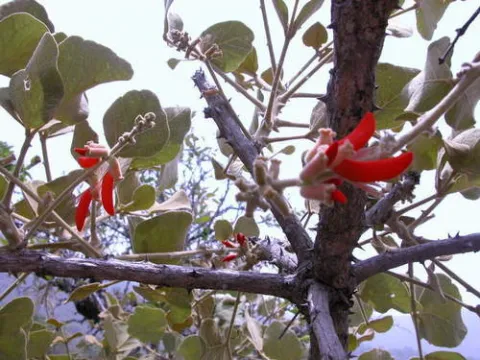
Erythrina sigmoidea
Erythrina sigmoidea
The sowing of Erythrina sigmoidea is typically performed in spring when soil temperatures reach 20–25 degrees Celsius. Due to the hard seed coat, scarification is required, followed by soaking in warm water for 24 hours to improve germination rates.
What the section contains
Erythrina sigmoidea
In specialized nurseries, seeds are sown into well-drained substrates at a depth of 2-3 centimeters. Containerized cultivation is highly recommended in the early stages to maintain precise control over moisture levels and environmental temperature.
Seedlings require consistent moisture until they enter the active growth phase, at which point watering should be gradually reduced. Transplantation to the permanent location should only occur once the risk of frost has completely passed.
Planting density depends on the intended application, with a recommended spacing of 3 to 5 meters for landscape design or hedge purposes, ensuring adequate airflow between individual specimens.
Propagation via cuttings is a viable alternative to seed sowing, provided that rooting hormones are applied and high air humidity is maintained within a greenhouse or propagator environment.
As a member of the Fabaceae family, Erythrina sigmoidea is a highly light-demanding crop that requires maximum exposure to direct sunlight to ensure robust growth and prolific flowering.
The plant thrives in well-drained, sandy loam or loamy soils with a neutral to slightly acidic pH. Waterlogging in the root zone must be avoided at all costs, as it frequently leads to severe fungal infections.
While mature plants exhibit significant drought tolerance, consistent watering is essential during the active vegetative growth period. Protection from frost is mandatory in colder climates, often requiring overwintering in climate-controlled facilities.
To maximize flower production, phosphorus and potassium-rich fertilizers should be applied during the budding stage. Nitrogen applications should be moderated to prevent excessive foliage development at the expense of floral display.
The optimal temperature range for the plant is between 22 and 30 degrees Celsius. Erythrina is sensitive to drafts and sudden temperature fluctuations, which restricts its cultivation to stable tropical or subtropical zones.
Common pests affecting Erythrina sigmoidea include spider mites and scale insects, which tend to proliferate rapidly in low-humidity environments, particularly in indoor or greenhouse settings.
Root rot is a major threat caused by improper watering regimes and poorly aerated soils. The application of systemic fungicides is often necessary if the initial signs of infection are detected.
Aphids can infest tender new shoots and flower buds, extracting sap and causing structural deformation. Regular monitoring and the use of appropriate insecticides are essential for maintaining plant health.
Powdery mildew may occur when humidity is too high and airflow is insufficient, manifesting as a white fungal coating on the surface of the leaves.
Maintaining cleanliness around the root collar and performing regular sanitary pruning are the primary preventive measures against the spread of both viral and fungal pathogens in Erythrina stands.