
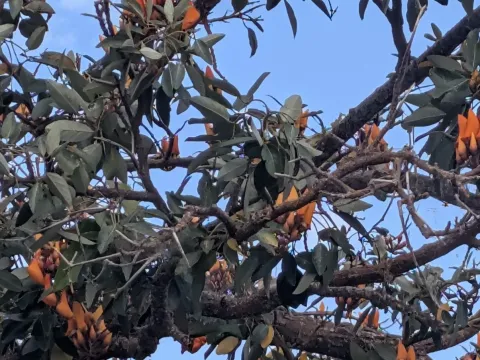
Erythrina fusca
Erythrina fusca
Erythrina fusca, commonly known as the immortality tree, is a prominent member of the Fabaceae family. It is distinguished by its remarkable physiological ability to thrive in waterlogged environments, including swamps and tidal regions.
What the section contains
Erythrina fusca
The species originates from tropical America but has been widely introduced across tropical regions of Asia and Africa. Its natural habitat includes riverbanks, coastal forests, and areas subjected to seasonal inundation, where other tree species struggle to survive.
Climatically, the tree requires consistently warm temperatures. It is highly intolerant to frost, necessitating a climate that maintains tropical conditions throughout the year to ensure rapid vegetative growth and proper development of the canopy.
Regarding soil requirements, Erythrina fusca prefers deep, fertile, and moist substrates. While it shows incredible tolerance to high water tables, it performs best in nutrient-rich alluvial soils that support its symbiotic relationship with nitrogen-fixing bacteria.
Agricultural management primarily focuses on initial establishment. Once mature, the tree is remarkably self-sufficient. It is frequently employed in agroforestry systems to naturally enhance soil nitrogen levels, providing long-term benefits to surrounding agricultural crops.
In terms of economic use, Erythrina fusca is a cornerstone of tropical shade management. It is extensively planted to provide shade for sensitive crops such as coffee and cocoa, protecting them from excessive solar radiation and maintaining soil moisture.
The wood of this tree is soft and lightweight, making it suitable for specialized woodcraft, carvings, and light utility construction. Although it is not categorized as high-grade timber, its versatility in local rural economies is highly regarded.
As a fodder source, the leaves are an essential dietary supplement for livestock in many tropical regions. The high protein content makes the foliage a valuable resource during the dry season when traditional forage is scarce for grazing animals.
Erythrina fusca plays a critical role in ecological stability. Its complex root systems are effective in stabilizing riverbanks and slopes, which helps in preventing soil erosion and managing the hydrology of agricultural lands.
The tree also serves as a vital component in biodiversity conservation. Its flowers are major attractors for pollinators, including hummingbirds and insects, thereby supporting the ecosystem services required for the productivity of nearby agricultural farms.