
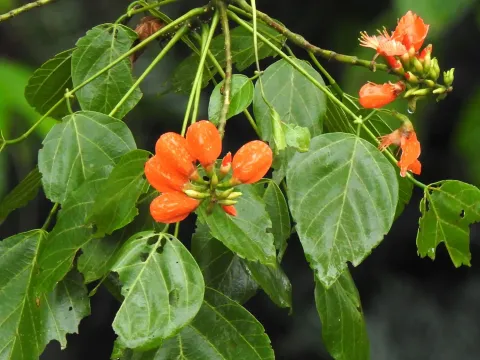
Erythrina subumbrans
Erythrina subumbrans
Erythrina subumbrans is a deciduous leguminous tree belonging to the Fabaceae family. Known for its ability to provide light, dappled shade, it is extensively used in tropical agroforestry systems.
What the section contains
Erythrina subumbrans
Native to Southeast Asia, this species has become a staple in coffee and tea farming. It acts as a companion crop, creating a beneficial microenvironment that buffers extreme temperatures and humidity.
The tree thrives in deep, well-draining soils with a neutral or slightly acidic pH. While it prefers consistent moisture, it displays remarkable resilience during the dry season once it is well established.
As a nitrogen-fixing species, Erythrina subumbrans significantly improves soil fertility. Farmers benefit from the tree's biomass, which is pruned regularly to provide nutrient-rich mulch for the surrounding crops.
Propagation is primarily conducted through stem cuttings, ensuring faster growth and structural uniformity compared to seed propagation. Proper spacing is essential to maintain optimal airflow and light penetration for the understory crops.
The species can be vulnerable to various wood-boring insects. Periodic inspections of the bark and trunk are recommended to prevent infestations that could weaken the structural integrity of the trees.
Fungal diseases, specifically anthracnose, may occur in humid environments with poor canopy ventilation. Regular pruning is necessary not only for mulch production but also to reduce the risk of pathogen spread.
Nematode infestations in the root zone can hinder nitrogen fixation efficiency. Implementing intercropping strategies and monitoring soil health helps mitigate these subterranean threats effectively.
Leaf-eating caterpillars may occasionally cause damage, although the tree is generally hardy enough to recover without chemical intervention. Biological pest control methods are usually sufficient to manage these populations.
Waterlogging remains a critical risk factor for the tree's health, leading to root rot. Ensuring that plantation sites are well-graded with adequate drainage channels is crucial for long-term survival.