
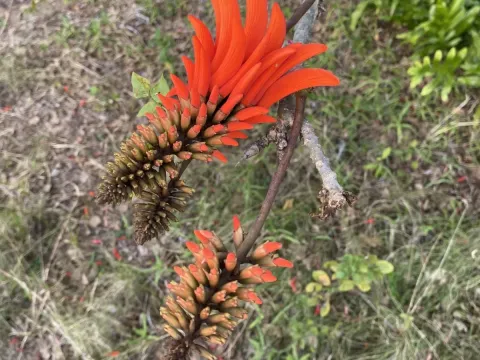
Erythrina lysistemon
Erythrina lysistemon
Erythrina lysistemon, commonly known as the common coral tree, is a deciduous tree belonging to the Fabaceae family. Native to South Africa, it is highly prized for its brilliant scarlet flowers which appear on bare branches, creating a striking visual impact in landscapes and gardens.
What the section contains
Erythrina lysistemon
The cultivation of this species requires full sun exposure and well-draining soil types. It is an exceptionally drought-tolerant plant once established, making it suitable for xeriscaping in frost-free regions. However, young trees need consistent moisture to develop a strong root system during their initial growth stages.
Requirements for the soil include a neutral to slightly acidic pH, ideally composed of a rich, loamy medium. Providing adequate spacing is essential, as the tree can grow to significant dimensions, and its branches are often adorned with small thorns that warrant careful handling during maintenance tasks.
Agricultural management involves regular pruning to maintain the desired shape and size. In containers or colder climates, the tree should be moved to a protected location during winter, as it cannot survive prolonged freezing temperatures, which often lead to tissue damage or plant death.
Beyond its ornamental value, Erythrina lysistemon is ecologically significant as a nectar source for various bird species. Its seeds and bark are also used in traditional herbal medicine, making it a multifaceted plant with both ecological, cultural, and potential economic utility in its native range.
Common pests affecting this species include aphids, mealybugs, and spider mites, particularly in indoor or greenhouse environments. Integrated pest management, focusing on manual removal and the use of insecticidal soaps, is usually sufficient to handle minor infestations without resorting to harsh chemicals.
Disease issues typically stem from improper environmental conditions, such as root rot caused by waterlogged soil. Ensuring that the planting site has excellent drainage and avoiding over-irrigation are the most critical steps in preventing fungal pathogens from colonizing the root zone.