
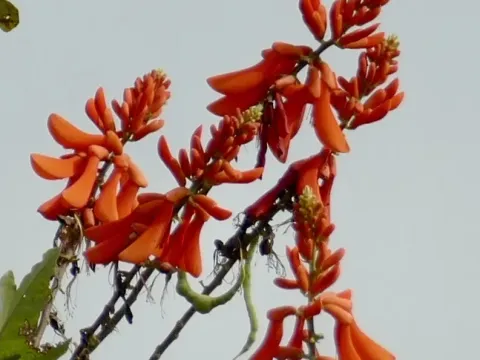
Erythrina senegalensis
Erythrina senegalensis
Erythrina senegalensis belongs to the Fabaceae family and is commonly propagated through seeds, which require mechanical scarification to ensure uniform germination.
What the section contains
Erythrina senegalensis
Nursery sowing is typically carried out at the beginning of the rainy season to provide the necessary hydration for successful seedling establishment.
Stem cuttings are a viable alternative for propagation, providing a faster way to multiply plants for medicinal or ornamental plantations.
The planting substrate should be well-prepared with organic matter to support the rapid growth of the root system in the early stages.
Spacing between plants must be carefully calculated, usually leaving at least 2–3 meters, to allow for optimal canopy development and future harvesting.
The plant thrives in full sun, requiring exposure to direct light for most of the day to ensure healthy foliage and regular flowering cycles.
It prefers well-drained sandy or loamy soils, as it is highly sensitive to waterlogged conditions that can compromise its root health.
Erythrina senegalensis is drought-tolerant once established, making it suitable for regions characterized by a distinct dry season.
The ideal soil pH range for this species is between 5.5 and 7.0, facilitating optimal nutrient uptake and general plant vigor.
Regular maintenance, including weeding and soil aeration around the base of the plant, is essential for maximizing growth rates in young trees.
Leaf spot diseases are among the most common threats to this species, often caused by fungal pathogens in areas with poor airflow.
Various insect pests, including larvae and aphids, can damage the leaves and tender shoots, leading to stunted development.
Root rot, driven by excessive soil moisture and poor drainage, remains the primary cause of mortality for seedlings and young plants.
Nematode infestations can severely hamper the plant's ability to absorb water and nutrients, which is particularly problematic in sandy soils.
Effective management includes regular monitoring for early signs of infestation and the implementation of appropriate protective measures to minimize losses.