
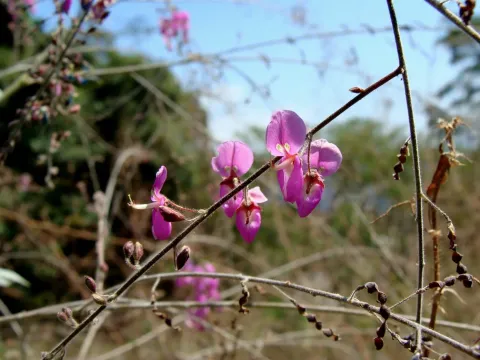
Desmodium distortum
Desmodium distortum
Sowing Desmodium distortum typically coincides with the onset of the rainy season to ensure adequate soil moisture for germination. In tropical environments, this timing is crucial for establishing a resilient root system during the initial growth phase.
What the section contains
Desmodium distortum
To improve germination rates, seeds are often scarified to overcome the physical dormancy imposed by their hard seed coats. Row sowing is highly recommended, allowing sufficient spacing to minimize early competition from weeds and to facilitate necessary maintenance tasks.
Seeds should be planted at a shallow depth of 1 to 2 centimeters to ensure effective emergence. A well-prepared seedbed, free of large clods and competitive vegetation, is essential to provide the best conditions for seedling development in the early stages.
When used in mixed pasture systems, sowing dates must be adjusted to ensure the legume component establishes itself before the companion grasses begin rapid biomass accumulation, preventing the legume from being shaded out.
The application of specific rhizobial inoculants is recommended to enhance the nitrogen-fixing capacity of the crop, especially when sowing on soils that have not previously hosted Desmodium species.
Desmodium distortum is a member of the Fabaceae family, well-adapted to tropical and subtropical climates. It thrives in various soil types, displaying a particular tolerance for acidic and low-fertility soils that are common in many tropical regions.
As a legume, this species forms a symbiotic relationship with nitrogen-fixing bacteria, contributing to soil health by enriching the ground with nitrogen. This trait makes it an excellent choice for agroforestry systems and soil fertility improvement programs.
The crop prefers temperatures between 20 and 30 degrees Celsius for optimal growth. While it is hardy and can survive in various conditions, prolonged exposure to severe cold may damage its aerial parts, although the plant often recovers from the roots.
Desmodium distortum shows moderate requirements for water; it needs regular moisture for lush growth but possesses a degree of drought tolerance thanks to a deep root system, allowing it to access water from deeper soil layers during dry spells.
- High adaptability to acidic soils.
- Excellent capacity for biological nitrogen fixation.
- Ability to thrive in partial shade conditions.
- Moderate tolerance to grazing pressure.
The biomass yield of Desmodium distortum is heavily influenced by the management system employed, such as grazing intensity or cutting frequency. With appropriate management, the plant produces a substantial amount of high-protein forage.
Intensive farming systems that include strategic phosphorus fertilization often see a significant increase in vegetative biomass production. Regular cutting practices encourage branching and leaf development, which contributes to higher overall yield per hectare.
When managed under grazing conditions, implementing a rotational grazing schedule is vital to allow for regrowth. Giving the plant adequate rest periods prevents root exhaustion and ensures the long-term productivity of the pasture area.
Seed production is an important commercial aspect for growers specializing in seed multiplication. Harvesting must be timed precisely to capture the yield before the seeds begin to shatter, which is a common characteristic of many legumes.
Overall, the yield potential makes it a reliable choice for farmers looking to enhance the nutritional profile of their animal feed through a sustainable, nitrogen-fixing legume component.
The primary health issues for Desmodium distortum are associated with fungal diseases, particularly in humid conditions where air circulation is poor. Leaf spot diseases are common and can reduce both the quantity and quality of the forage.
Various insects and pests that target legumes can impact the development of both leaves and seeds. Early detection through regular crop monitoring is essential to implement control measures before significant damage occurs.
Root rot is a major threat if the soil drainage is inadequate or if the field experiences prolonged waterlogging. Selecting sites with good drainage and avoiding heavy soil compaction are key preventive measures for maintaining plant health.
Integrated pest management (IPM) strategies, which prioritize biological controls and selective insecticides, are effective in minimizing environmental impact while protecting the crop from major outbreaks of harmful pests.
Good agricultural practices, such as maintaining appropriate stand density and clearing weeds, promote better airflow through the canopy, significantly reducing the risk of disease spread in the crop.
Harvesting for forage is recommended before the flowering stage to ensure the highest protein concentration in the stems and leaves. This yields the most nutritious feed for livestock, maximizing digestion and weight gain.
When harvesting for hay, it is important to allow sufficient time for drying, as the stems contain significant moisture. Using proper machinery to ensure uniform drying in windrows helps prevent mold formation during subsequent storage.
In grazing scenarios, maintaining a residual stubble height of at least 10-15 centimeters post-grazing promotes rapid regrowth. This practice preserves energy reserves in the roots, ensuring the plant can bounce back effectively.
Seed harvesting should be performed during dry, sunny weather when the pods turn brown. This reduces the risk of spoilage and minimizes seed loss during mechanical harvesting, providing a cleaner product for storage.
After harvest, cleaning and drying seeds to an optimal moisture content is crucial for maintaining germination quality during long-term storage in cool, dry, and well-ventilated warehouse facilities.