
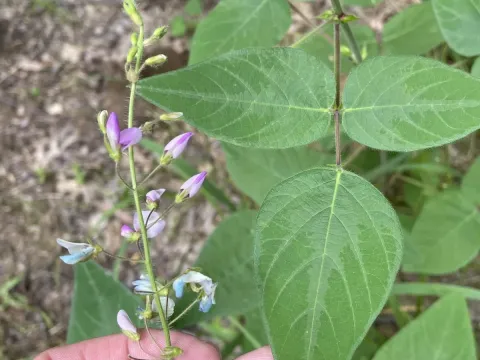
Desmodium canescens
Desmodium canescens
Sowing Desmodium canescens, commonly known as hoary tickclover, should take place in the spring once soil temperatures have reached at least 15 degrees Celsius. Consistent moisture is crucial for successful germination and initial establishment.
What the section contains
Desmodium canescens
Seeds should be planted at a shallow depth, typically 1 to 2 centimeters. Because the seeds are relatively small, planting them too deeply will prevent successful emergence, while surface sowing requires immediate rolling to ensure contact.
Scarification is highly recommended prior to planting to break the seed dormancy, which is common in many leguminous species. This simple pretreatment significantly increases germination uniformity across the field.
Depending on the intended use, sowing rates vary. For seed production, a wider row spacing is preferred to manage weeds effectively. For forage purposes, higher density sowing is generally practiced.
Good soil contact through rolling after seeding is a key agronomic step. This practice prevents the soil from drying out around the seed and ensures a more reliable stand development during the early growth phase.
Desmodium canescens is a perennial herbaceous plant belonging to the Fabaceae family. It is native to North America, where it thrives in open woodland areas, prairies, and field edges.
The plant prefers well-drained, fertile soil, though it shows notable tolerance for a variety of soil textures, including sandy and silty loams. It is known for its moderate drought resistance once the root system is established.
Sunlight requirements are flexible; while the species grows best in full sun, it remains productive in partial shade, making it a suitable candidate for silvopasture and agroforestry systems.
As a legume, its ability to fix atmospheric nitrogen is a major agricultural benefit. It functions as a bio-fertilizer, enriching the soil with nitrogenous compounds that support the growth of neighboring vegetation.
The climate requirements align with temperate and subtropical regions. While hardy, the plant should be monitored in areas with extreme temperature fluctuations to ensure long-term persistence in pastures.
The crop is susceptible to various leaf spot diseases, especially under conditions of high humidity or poor air circulation. Managing these pathogens often requires cultural practices rather than chemical control.
Insect pests, including various caterpillars and beetles, may feed on the foliage. While usually not devastating, heavy infestations can reduce the quality and quantity of the forage produced during the season.
Weed management is most critical during the first few weeks after emergence. Because the plant establishes its root system before rapid vertical growth begins, it can be easily outcompeted by aggressive weeds.
Preventative measures include rotating crops and maintaining proper field hygiene. Avoiding water-logged soil conditions also reduces the incidence of soil-borne diseases that can weaken the root system.
Integrated pest management (IPM) should be applied if monitoring indicates economic thresholds are met. Maintaining biodiversity around the crop edges often encourages natural predators of the insects.
Forage harvesting is ideally timed during the early flowering stage. At this developmental phase, the concentration of crude protein and digestible energy in the leaves and stems is at its absolute peak.
Care must be taken during the curing process for hay. Excessive mechanical handling or harsh sun exposure can lead to leaf shattering, which significantly degrades the nutritional value of the final product.
Seed harvesting requires precision as the seed pods often mature unevenly across the plant. Swathing the crop when the pods turn brown can help ensure maximum seed yield while minimizing losses.
Specialized equipment settings are required to separate the seeds effectively. Because the plant may have hooked hairs on its pods, cleaning the harvested material requires careful screening to remove debris.
Post-harvest storage should involve keeping the seeds in a clean, dry, and cool environment. Proper ventilation is essential to maintain seed viability and prevent the development of mold and toxins.