
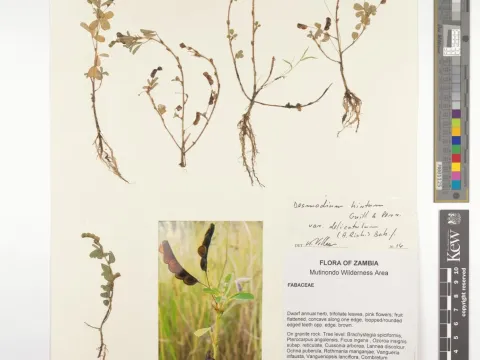
Desmodium hirtum
Desmodium hirtum
Desmodium hirtum is a perennial legume species highly valued for its contribution to pasture improvement and soil nitrogen fixation in tropical environments.
What the section contains
Desmodium hirtum
The timing of sowing is critical and should ideally coincide with the onset of the rainy season to ensure sufficient moisture for seedling establishment.
Seeds of this species often possess a hard coat, requiring mechanical or chemical scarification prior to planting to maximize germination rates in the field.
Sowing density must be calibrated to allow for rapid canopy development, which is essential to minimize weed competition during the early growth stages.
Adequate soil preparation, including light cultivation and removal of established weeds, creates an optimal seedbed for the small seeds of this legume.
This crop thrives in a wide range of soil types, showing notable tolerance for moderately acidic and nutrient-poor conditions typical of tropical regions.
Well-drained soil is a primary requirement, as the species is susceptible to waterlogging and root decay if kept in overly saturated conditions for extended periods.
Desmodium hirtum is a sun-loving plant, though it demonstrates a degree of shade tolerance, making it suitable for silvopastoral systems under tree canopies.
Consistent temperatures are vital for growth, as the plant is sensitive to frost and extreme cold, which can significantly inhibit its productive capacity.
Symbiotic relationships with specific Rhizobium bacteria are essential for its nitrogen-fixing capabilities, which in turn improve the overall fertility of the soil.
The primary use of Desmodium hirtum is as a high-quality forage crop, providing a rich source of dietary protein for livestock in tropical and subtropical areas.
Under favorable management conditions, the plant can produce multiple cuts per season, offering a consistent and reliable supply of green biomass.
Its ability to remain productive over several years makes it a cost-effective choice for long-term pasture maintenance and forage production programs.
When used as a green manure, the crop significantly contributes to organic matter accumulation, thereby enhancing soil structure and nutrient cycling efficiency.
Yield stability is heavily dependent on regular management practices, including appropriate harvest timing to balance biomass volume with nutritional quality.
Fungal diseases related to high humidity and poor airflow can pose a risk, particularly in dense stands where moisture tends to accumulate between leaves.
Insect pests, including various leaf-eating beetles and caterpillars, can cause localized damage, reducing the photosynthetic efficiency and total yield of the crop.
Nematodes are a recurring concern in light, sandy soils, potentially stunting growth and weakening the plant's ability to resist environmental stresses.
Integrated pest management strategies are recommended to keep damage below economic thresholds without relying solely on chemical intervention.
Maintaining a healthy, vigorously growing crop through proper nutrition and water management is the most effective defense against most common pathogens.
Harvesting for forage is optimally performed during the early flowering stage when the nutrient content, particularly nitrogenous compounds, is at its peak.
Proper drying techniques are required when producing hay to prevent leaf shattering and to ensure the final product retains its high nutritional value.
Seed harvesting should be timed carefully based on the maturity of the pods, which often ripen unevenly, necessitating observation and precise timing.
Mechanized harvest equipment must be properly adjusted to account for the physical characteristics of the plant to minimize loss during the cutting process.
Post-harvest storage must emphasize dryness and proper ventilation to maintain the viability of seeds and the quality of harvested forage over time.