
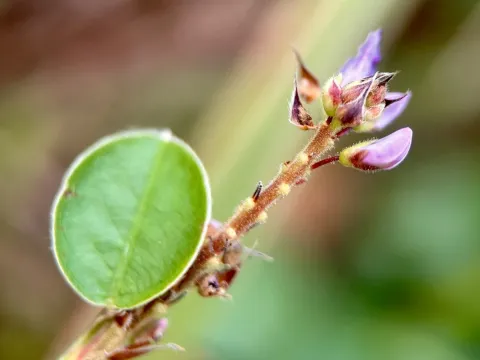
Desmodium heterocarpon
Desmodium heterocarpon
Desmodium heterocarpon is a perennial herb belonging to the Fabaceae family, recognized for its significant role in tropical agricultural systems. This plant is valued as a versatile legume capable of growing in various tropical environments across Asia, Africa, and the Pacific.
What the section contains
Desmodium heterocarpon
Botanically, it is characterized by its trailing or ascending stems that can root at the nodes when in contact with moist soil. The foliage consists of trifoliate leaves, and the plant produces small, densely packed inflorescences that are typical for the genus Desmodium.
The plant is primarily established by sowing seeds at the onset of the rainy season to ensure optimal moisture for germination. Due to its slow initial growth rate, it is often sown in prepared seedbeds or mixed with other grasses that provide protection until it is established.
Vegetative propagation is also possible through stem cuttings, which allows for rapid coverage on larger areas. This method is often preferred when immediate soil protection against erosion is required on slopes or exposed land.
Management during the establishment phase is critical. Controlling weeds early on allows the Desmodium to develop a dense canopy, which eventually suppresses unwanted vegetation through competition for space and light.
Desmodium heterocarpon thrives in warm and humid climates, requiring temperatures typically between 20 and 30 degrees Celsius. It is highly sensitive to frost and cannot survive in regions with freezing temperatures.
Regarding soil requirements, it adapts to various soil types, including moderately acidic soils. However, it performs best in fertile, well-drained loamy soils. It is capable of tolerating temporary waterlogging but generally prefers good drainage.
Sunlight is a key factor for productivity; although it can tolerate partial shade, maximum biomass production is achieved in full sun. In agroforestry systems, it is often used as an understory crop provided the tree canopy is not too dense.
A major advantage of this crop is its nitrogen-fixing ability through symbiosis with Rhizobium bacteria. This biological process significantly improves soil fertility, making it an excellent candidate for crop rotation and restorative land management.
Regular rainfall or supplemental irrigation is necessary during the active growing season. The plant's ability to maintain productivity depends on the balance of nutrients, particularly phosphorus, which should be monitored for optimal forage quality.
The primary use of Desmodium heterocarpon is as high-quality forage for livestock. It is rich in protein and highly palatable, making it an ideal component for grazing pastures for cattle, goats, and sheep.
It is frequently grown in association with tropical grasses, such as Brachiaria or Panicum species. This mixture creates a balanced pasture that provides both energy and protein, significantly improving animal health and growth rates.
Beyond its feed value, it is a superior cover crop. Its ability to create a dense mat of vegetation helps prevent soil erosion, reduces evaporation from the soil surface, and increases the infiltration of rainwater into the ground.
In conservation agriculture, it serves as a valuable green manure. After reaching peak biomass, the plant material can be incorporated into the soil, adding essential organic matter and fixed nitrogen for subsequent food crops.
The yield of green biomass is generally consistent throughout the rainy season. However, productivity varies depending on the intensity of grazing, soil quality, and the overall management of the pasture system.
Common health issues include various fungal diseases such as leaf spots, which thrive during prolonged wet weather and high humidity. These infections can reduce the leaf area, thereby affecting the plant's overall photosynthetic potential.
Pests, including lepidopteran larvae and beetles, can cause significant damage to the foliage. Furthermore, some populations of root-knot nematodes may inhibit growth, especially in sandy soils where the plant's vitality can be compromised.
Integrated pest management is the preferred strategy, focusing on balanced grazing intervals to maintain plant vigor. Ensuring the pasture is not overgrazed is essential to preventing the spread of diseases and pests within the population.
Chemical control is rarely utilized in grazing settings to ensure forage safety. Instead, selecting resistant varieties and maintaining soil health through proper nutrient management are the most effective ways to mitigate threats.
If disease pressure becomes too high, resting the paddock allows the Desmodium population to recover. Strategic resting also helps in maintaining the botanical composition of the pasture, preventing the dominance of weeds or invasive species.
Effective management of grazing or harvesting is essential for the longevity of Desmodium heterocarpon. Grazing should be rotational, allowing sufficient recovery time for the plants to replenish their root reserves.
When harvesting for hay or greenchop, the cut should be made at a height that retains the lower nodes. This practice ensures quick regrowth and prevents the plant from exhausting its energy resources after being cut.
Drying the forage for hay requires careful timing to preserve nutrient content. Given the high protein content of the leaves, rapid curing is necessary to prevent spoilage and the development of fungi during the drying process.
Seed harvesting requires diligence as the pods are prone to shattering upon drying. Collecting seeds in the early morning while dew is still present helps minimize losses due to natural dispersal and shattering.
Proper grazing intensity ensures the long-term success of the pasture. By avoiding continuous, heavy grazing, farmers can maintain the Desmodium component of the pasture for many years, enhancing the overall productivity of the livestock system.