
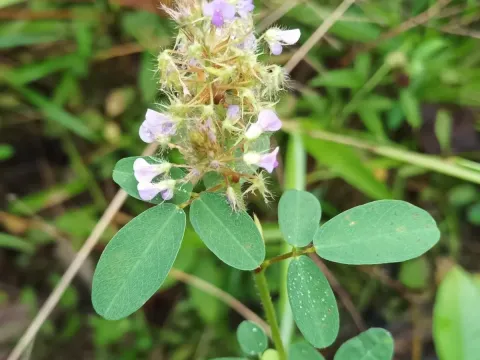
Desmodium barbatum
Desmodium barbatum
Desmodium barbatum is a perennial herbaceous plant belonging to the Fabaceae family. It is a typical representative of tropical and subtropical flora, known for its high ecological plasticity and adaptability.
What the section contains
Desmodium barbatum
The plant prefers well-drained, slightly acidic to neutral soils. It develops successfully on loamy and sandy soils, demonstrating resilience to moderate soil degradation.
This crop requires a consistently warm climate and is sensitive to heavy frost. Optimal growth is observed with adequate rainfall, although the plant can withstand short periods of drought.
In its natural habitat, Desmodium is often found in open areas, pastures, and forest edges. Due to its developed root system, it actively participates in atmospheric nitrogen fixation, improving soil fertility.
Agricultural management includes maintaining optimal planting density to prevent weed competition during the early stages of development. Regular weeding is necessary only during the establishment phase.
The agricultural use of Desmodium barbatum is focused on creating a high-quality fodder base for ruminants. The green mass of the plant is characterized by a high protein content and good palatability for livestock.
Beyond fodder, the crop is utilized as an effective cover plant. Its dense growth habit efficiently suppresses weed development and protects the topsoil horizon from erosion.
In tropical farming systems, this species is often sown as a green manure crop to increase organic matter content in the soil. The plant biomass decomposes rapidly, enriching the soil with nitrogen and essential minerals.
Economic value also lies in the plant's ability to maintain vegetative organs for an extended period, ensuring a continuous ground cover for fields.
The yield of green mass depends directly on the frequency of mowing. By following a proper rotation schedule, multiple biomass growth cycles can be achieved within a single growing season.
The crop possesses high resistance to most common agricultural pests in the tropical region. However, when grown in monoculture, damage from leaf-eating insects may occasionally occur.
Among fungal diseases, leaf spot represents the greatest threat, especially under conditions of stagnant water and high air humidity. Ensuring proper ventilation of the canopy is crucial.
To prevent the spread of root rot, one should avoid areas with heavy, waterlogged soils where drainage is impaired. Crop rotation is considered the primary protective measure.
Nematodes may attack the root system in severely depleted soils, which reduces the growth rate of the crop. Using healthy seed material minimizes the risk of infestation.
Comprehensive protection includes phytosanitary monitoring of the fields and prompt removal of infection sites at the first signs of disease.