
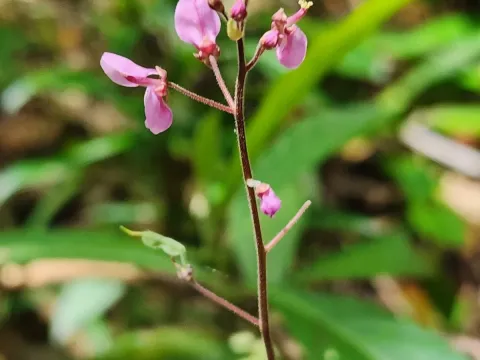
Desmodium axillare
Desmodium axillare
Desmodium axillare is a perennial creeping legume belonging to the Fabaceae family. It is recognized for its aggressive growth habit, where stems spread and root at the nodes, forming a dense ground cover that is highly beneficial for soil protection.
What the section contains
Desmodium axillare
The optimal time for sowing is at the beginning of the rainy season. This timing ensures that seedlings receive consistent moisture, which is crucial for establishing a healthy root system before any potential dry spells occur.
Seeds of this species possess a hard seed coat, necessitating scarification before planting to maximize germination rates. The recommended planting depth is shallow, generally between 1 and 2 centimeters, to allow for quick emergence.
It is commonly established through direct drilling or by broadcasting in established pastures. Row spacing varies based on the desired density, though closer spacing is usually preferred for faster soil coverage in erosion-prone areas.
The plant demonstrates excellent nitrogen-fixing capabilities through symbiosis with native soil rhizobia. This biological process reduces the need for supplemental nitrogen fertilizers, making it an economically attractive option for sustainable farming systems.
This species is native to the humid tropics and subtropics of Central and South America. It thrives in warm temperatures, with an ideal growth range between 20 °C and 30 °C, and cannot tolerate frost or freezing conditions.
Desmodium axillare adapts to a variety of soil types but performs best in well-drained, fertile loams with a slightly acidic to neutral pH. It is sensitive to waterlogged conditions, making proper soil drainage a prerequisite for successful cultivation.
One of the most notable features of this crop is its high shade tolerance. This trait allows it to be integrated into agroforestry systems, such as in coffee or fruit plantations, where light availability is significantly restricted.
Adequate water supply is essential for maintaining biomass production. While it can survive short-term dry periods, extended drought conditions will negatively impact its growth rate and overall nutritional quality.
It is highly competitive against weeds once established, forming a thick mat that smothers unwanted vegetation. However, during the early establishment phase, protection from competing grasses may be necessary to ensure its survival.
As a high-quality forage crop, Desmodium axillare is valued for its high protein content, often ranging from 18% to 22% in leaf tissue. This makes it an excellent feed source for cattle, goats, and other ruminant livestock.
Yield potential is significant, with the crop capable of producing high volumes of green fodder per hectare. It maintains good palatability even during the flowering stage, ensuring that livestock continue to graze effectively.
It is well-suited for intensive grazing management, as it regrows vigorously after being browsed or cut. This resilience allows for multiple harvest cycles per year, provided that soil nutrients are managed appropriately.
Beyond its feed value, the crop serves as a green manure. Its contribution to soil organic matter and nitrogen levels improves the structure and fertility of the land, benefiting subsequent crops in a rotation cycle.
In addition, the plant acts as a natural soil conditioner, preventing surface erosion on sloped terrains. Its ability to create a permanent ground cover makes it a preferred choice for rehabilitating degraded tropical agricultural lands.
Anthracnose is the most prevalent fungal disease, particularly in high-humidity tropical environments. It affects leaves and stems, which can lead to reduced biomass production and poor quality of the harvested forage.
Various insect pests, including leaf-eating caterpillars, can cause significant damage during the peak growing season. Integrated pest management strategies are generally recommended to mitigate these impacts without harming beneficial insects.
Root-knot nematodes can become a problem in lighter soils, especially in monoculture systems. Crop rotation and the inclusion of non-host species in the cropping cycle are effective methods for reducing nematode populations.
Bacterial wilt can occur in poorly drained areas where water accumulation creates stressful conditions for the root system. Avoiding low-lying, swampy fields is essential for preventing the rapid spread of this condition.
While the plant is quite hardy, severe nutrient deficiencies in the soil can make it more susceptible to opportunistic diseases. Maintaining an optimal fertility balance is key to ensuring the longevity and productivity of the forage stand.