
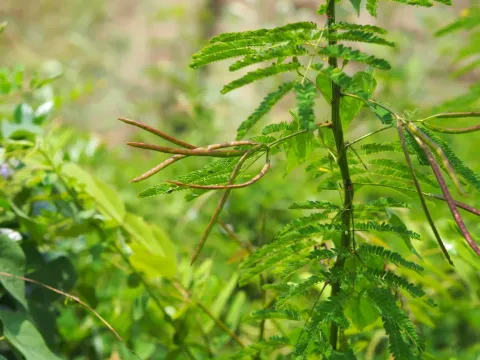
Desmanthus
Desmanthus
Desmanthus is typically sown in the spring when soil temperatures reach a stable 15–18 degrees Celsius. Adequate moisture in the topsoil is essential for successful and uniform germination.
What the section contains

Desmanthus
The seeding rate depends on the chosen variety and sowing method, usually ranging from 4 to 8 kg of seeds per hectare. The seeds should be planted at a shallow depth of no more than 1.5–2 centimeters to ensure effective emergence.
Pre-sowing field preparation requires careful weed control, as the crop develops slowly in its early growth stages. Using high-quality, scarified seeds significantly improves field emergence rates.
Scarification or soaking of seeds is recommended to overcome the physical dormancy often found in the hard seed coats of Desmanthus species, leading to faster and more predictable stand establishment.
The crop demonstrates excellent self-regeneration capabilities under favorable conditions, allowing producers to manage pastures with minimal soil disturbance or re-seeding costs in subsequent years.
Desmanthus is a perennial legume known for its exceptional resilience in harsh environments, particularly its ability to withstand prolonged drought. Its natural range originates from the Americas, where it has adapted to various climatic niches.
The plant thrives in well-drained soils with neutral to slightly alkaline pH levels. It performs remarkably well on heavy clay soils, where it outcompetes other legumes that might struggle with temporary waterlogging or soil compaction.
Maximum yield potential is achieved with abundant sunlight. The crop does not tolerate shading by taller weeds or canopy coverage, making open, sunny fields the best locations for successful production.
With an extensive root system, Desmanthus can extract water from deep soil profiles, maintaining steady growth even during dry summer spells when other forage options may enter dormancy.
Temperature is a critical factor for growth; the crop is warm-season oriented and sensitive to severe frosts, which can cause significant damage to the vegetative parts of the plant during the growing season.
Desmanthus is primarily utilized as a high-protein forage source for livestock. Its foliage is highly nutritious, providing an excellent supplement to the diets of cattle and other ruminants throughout the grazing season.
Yield levels depend on harvest frequency and the inherent fertility of the soil. Under optimal management, the crop can provide multiple high-quality cuttings or support sustained intensive grazing cycles.
Beyond its feed value, Desmanthus plays a vital role in land restoration and erosion control. As a nitrogen-fixing legume, it effectively improves soil structure and fertility over time through root decomposition.
The hay produced from Desmanthus is comparable in quality to alfalfa, offering a robust alternative that is often more tolerant to heavy grazing pressure and trampling in pasture environments.
For improved farm productivity, it is often recommended to integrate Desmanthus into mixed pastures with drought-hardy grasses, creating a balanced and reliable forage system for seasonal livestock management.
The main threats to Desmanthus health include various root rots that may develop if the soil remains waterlogged for extended periods. Selecting well-drained sites is the most effective preventative measure.
Occasional infestations of leaf-feeding insects, such as weevils, may occur; however, the plant exhibits strong regenerative capacity and usually recovers well after moderate pest pressure.
Weed competition is particularly intense during the seedling phase. Agronomists suggest implementing inter-row cultivation until the canopy closes to prevent early-stage growth suppression.
While viral diseases are less common, they can negatively impact seed production. Using certified healthy seeds and maintaining proper distance between crop rotations helps mitigate disease risks.
Regular field scouting is essential to identify pest hotspots early. Integrated pest management strategies, including biological controls or targeted applications, should be employed only if economic thresholds are reached.