
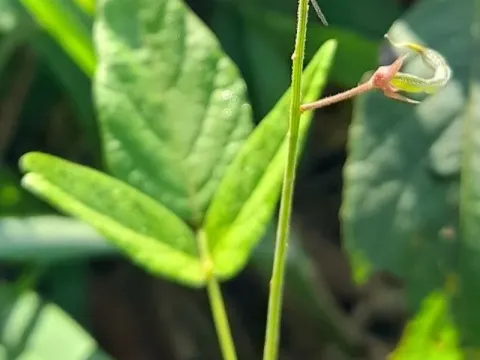
Desmodium affine
Desmodium affine
Desmodium affine is a perennial herbaceous plant belonging to the Fabaceae family. As a forage legume, it is valued for its nutritional profile and its significant contribution to soil nitrogen enrichment through symbiotic nitrogen fixation.
What the section contains
Desmodium affine
Originating from Central and South America, the species thrives in tropical and subtropical regions. It is well-adapted to various environmental conditions, being found in both forest margins and open savannah-like landscapes where it serves as a key vegetation component.
The crop prefers warm climates and exhibits good growth in areas with adequate rainfall. It is versatile regarding soil types, provided that the soil is sufficiently well-drained, which prevents root rot and ensures the plant's long-term survival in pastoral systems.
Agronomic management involves careful soil preparation, as Desmodium affine seedlings require a competition-free environment during the establishment phase. Once established, the crop forms a dense canopy that effectively prevents soil erosion and suppresses undesirable invasive weed species.
Regarding its utility, Desmodium affine is widely used as a high-quality forage plant for grazing livestock. It is often integrated into mixed swards with tropical grasses, enhancing the overall protein content of the feed and supporting sustainable beef and dairy production systems.
Pathogens such as anthracnose and various leaf spot fungi pose the most significant threat to Desmodium affine, especially in environments with high humidity and limited air circulation, which favor fungal development.
Insect pests, particularly aphids, caterpillars, and seed weevils, can significantly impact biomass accumulation and seed yield, requiring integrated pest management strategies to maintain plant vigor.