
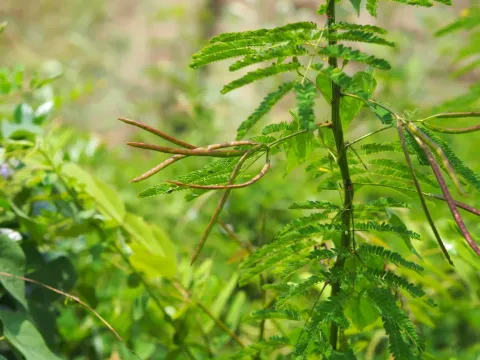
Desmanthus
Desmanthus Willd.
Desmanthus seeds possess a hard seed coat, which necessitates mechanical or chemical scarification to improve germination rates and uniformity of emergence.
What the section contains


Desmanthus
The ideal planting window is during the spring months once soil temperatures have consistently reached 20 degrees Celsius to support rapid establishment.
Seeds should be drilled in rows spaced 30 to 50 centimeters apart, at a shallow depth of 1 to 2 centimeters to ensure adequate contact with moisture.
Seedling growth is characteristically slow in the early stages, making weed management essential during the first eight weeks of the crop life cycle.
A seeding rate of 5 to 10 kilograms per hectare is generally recommended, depending on seed quality and the specific regional planting environment.
Desmanthus is a drought-tolerant, perennial legume highly valued for its ability to persist in harsh, semi-arid environments where other legumes might fail.
The crop is remarkably versatile regarding soil types, thriving in heavy clays, alkaline soils, and even those with moderate salinity levels.
Full sunlight is critical for optimal growth, as the plant does not tolerate shading from competing vegetation, tall grasses, or overhanging tree canopies.
Its deep taproot system allows it to access water deep within the soil profile, ensuring the plant remains productive during extended dry spells.
It prefers warm growing conditions and performs best when daytime temperatures range between 25 and 35 degrees Celsius throughout the growing season.
The primary use of Desmanthus is as a high-protein forage source for cattle, sheep, and goats, providing essential nutrients during periods of pasture scarcity.
Its high nitrogen-fixing capacity improves soil fertility, making it an excellent candidate for intercropping and sustainable rotation programs.
In well-managed systems with adequate moisture, Desmanthus can produce high biomass yields that maintain nutritional quality well into the flowering stage.
Regular grazing or harvesting helps maintain the stand density, encouraging the plant to produce more tillers and increasing overall forage production.
Beyond forage, the plant is sometimes utilized for land reclamation and erosion control due to its ability to stabilize the soil with its extensive root architecture.
Desmanthus is generally robust, but high humidity levels can lead to localized issues with fungal leaf spots, which may affect foliage quality.
Insects like weevils can damage flowers and pods, potentially impacting seed yield and affecting the reproductive success of the stand.
Seedling pests such as wireworms and crickets can significantly reduce plant stands, so monitoring and preventive treatments are often necessary.
Integrated Pest Management (IPM) practices, including proper crop rotation and the selection of resistant cultivars, remain the best defense against major threats.
Maintaining adequate aeration within the stand through proper grazing intensity helps to mitigate the development of moisture-related plant diseases.
For high-quality hay production, harvesting should be performed at the early flowering stage to ensure the best balance of protein and digestibility.
In grazing scenarios, it is crucial to avoid overgrazing below a height of 15 centimeters to protect the plant's basal buds for rapid regrowth.
Seed harvesting is conducted when the pods turn brown and dry; precision settings on combines are required to minimize pod shattering and seed loss.
Careful drying and storage of hay are vital to prevent spoilage and maintain the palatability of the forage for livestock feeding during winter.
Proper harvest management extends the life of the stand, ensuring that the field remains productive for multiple seasons without the need for frequent replanting.