
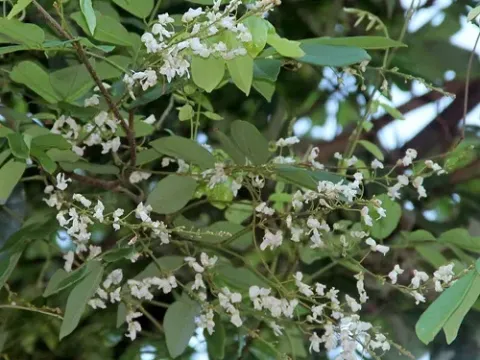
Derris scandens
Derris scandens
Derris scandens is a significant woody vine belonging to the Fabaceae family. Native to tropical regions of Southeast Asia, this climbing plant thrives in warm, humid climates where it can easily extend over large canopy structures or support systems.
What the section contains
Derris scandens
The crop prefers well-drained, fertile soil with a high organic matter content. It is sensitive to waterlogging, so site selection must prioritize areas with excellent natural drainage to ensure the health of the extensive root system.
Botanically, it is characterized by compound leaves and racemes of small flowers. The plant exhibits vigorous growth, necessitating regular pruning and training when managed in an agricultural setting to prevent excessive overcrowding and facilitate access.
Climate requirements include a stable temperature range, generally between 20°C and 32°C, and consistent rainfall or irrigation. In drier climates, supplemental watering is essential to maintain the high rates of vegetative growth required for industrial harvesting.
Effective management also involves soil fertilization with nitrogen-fixing bacteria, which complements the plant's natural legume symbiosis. Monitoring nutrient levels is key to maximizing the accumulation of secondary metabolites in the plant tissues.
The primary economic value of Derris scandens lies in its roots and stems, which contain rotenone. This compound is a powerful naturally occurring insecticide used in integrated pest management programs globally.
Harvesting is typically scheduled after the plant has reached its peak maturity, often between three to five years of age. Roots are carefully excavated, ensuring minimal loss of secondary metabolites during the extraction and handling process.
Post-harvest procedures include thorough cleaning, slicing, and drying under controlled conditions. This ensures the stability of the active insecticidal ingredients, which are highly sensitive to excessive heat and UV degradation.
Once dried, the raw material is processed to extract the concentrated active components. This industrial use requires adherence to quality control standards to ensure that the final biopesticide product is consistent and effective for end-users.
Organic farmers rely on this crop as an alternative to synthetic pesticides. Its degradability in the environment makes it a preferred choice for sustainable agriculture, provided it is applied within safe limits to protect biodiversity.