
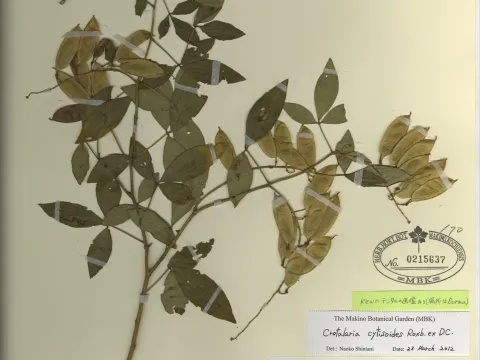
Crotalaria cytisoides
Crotalaria cytisoides
Crotalaria cytisoides is a heat-loving plant; therefore, sowing should only be carried out once the soil at seed depth has warmed up sufficiently. In tropical and subtropical regions, the beginning of the rainy season is considered the optimal time for sowing.
What the section contains
Crotalaria cytisoides
Stable soil moisture is required for high-quality seed germination. It is recommended to scarify the seed material before sowing, as the dense seed coat of Crotalaria can hinder uniform emergence under field conditions.
The seeding rate is calculated based on the intended use; if the crop is grown as a cover crop for weed suppression, the plant density is increased. For wide-row planting intended for green biomass, sufficient spacing is left for inter-row maintenance.
Seeds are sown at a depth of 2 to 4 centimeters, depending on the soil texture and moisture level. Rolling the soil after sowing significantly improves the contact between the seed and the soil, promoting uniform germination.
At the early stages of vegetation, the crop grows relatively slowly, making it crucial to ensure the field is free of weeds during the initial phase, allowing the plants to successfully develop their root system and aerial biomass.
This legume plant is valued for its high adaptability to poor soils. Crotalaria cytisoides is capable of thriving in acidic and nutrient-depleted soils by fixing atmospheric nitrogen through symbiotic bacteria.
The crop prefers well-drained areas, as waterlogging in the root zone can lead to the development of fungal diseases. At the same time, it demonstrates high drought tolerance once the root system has penetrated deep into the soil profile.
The optimal soil pH range for this species is quite broad, although the best results in terms of biomass accumulation are observed on light sandy loam and loamy soils with good aeration.
The plant is highly photophilous. Under significant shade, Crotalaria cytisoides becomes leggy, and its nitrogen-fixing capacity and the quality of its vegetative mass are significantly reduced.
The temperature regime is a critical factor: the crop cannot withstand even short-term frosts. For active growth and seed development, the plant requires high ambient temperatures throughout the entire growing season.
The agricultural use of Crotalaria focuses on producing large volumes of green biomass, which serves as a valuable green manure. Due to its nitrogen-fixing ability, it significantly enriches the topsoil after being incorporated into the ground.
Biomass yield depends directly on soil fertility, rainfall, and adherence to agronomic practices. Under favorable conditions, the plant is capable of forming a dense stand that reaches considerable height.
Beyond nitrogen fixation, the organic matter of Crotalaria improves the physical structure of the soil upon decomposition, increasing its water-holding capacity and biological activity, which is essential for organic farming.
The crop is also valued for its deep-rooting action, which breaks up compacted soil layers, contributing to improved aeration and permeability at depths inaccessible to many other cover crops.
Crotalaria biomass is characterized by a high nitrogen content and a rapid mineralization process, allowing subsequent agricultural crops to utilize nutrients shortly after the green manure has been tilled into the soil.
Among the primary biological threats to Crotalaria are root rots, which develop predominantly in waterlogged areas with poor drainage capacity.
Pests that affect legume crops, such as various species of weevils and cutworms, can damage young plants by feeding on leaves and growing points, delaying the crop's development in the early stages.
A key factor in risk mitigation is the observance of crop rotation. It is not recommended to return Crotalaria to the same field more frequently than once every three to four years to avoid the buildup of specific soil-borne pathogens.
Nematodes can also pose a serious problem when growing this species in tropical conditions. The use of resistant cultivars and careful selection of preceding crops help to minimize economic losses.
Monitoring the condition of the crop during active growth allows for the timely detection of infestation hotspots and the implementation of necessary protective measures, integrating biological and, if necessary, chemical control methods.
The timing for harvesting or incorporating Crotalaria into the soil depends on the primary goal of cultivation. For green manure purposes, the plant is mowed during the budding or early flowering phase, when the concentration of nutrients in the biomass is at its peak.
If the goal is seed production, harvesting is carried out after the pods have acquired their characteristic color and the seeds inside have become hard. It is important to avoid over-ripening, as many Crotalaria species are prone to pod shattering.
The mowing process is often combined with shredding, which accelerates the decomposition of plant residues within the soil horizon. The shredded material is evenly distributed across the field and incorporated using disk harrows or plows.
For seed crops, harvesting is performed using combines with appropriate settings for the threshing unit to avoid mechanical damage to the seeds, which are susceptible to injury due to their physical structure.
After harvesting for seeds, the remaining plant residues can be used as mulch or tilled into the soil to replenish organic matter stocks, effectively completing the crop cycle on the field.