
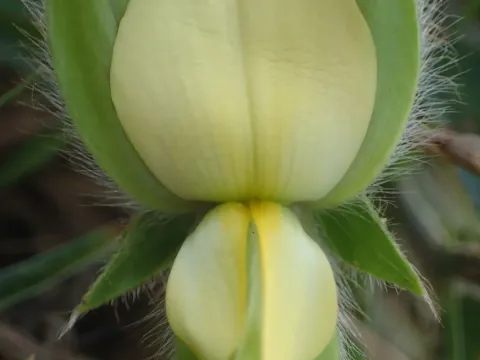
Crotalaria calycina
Crotalaria calycina
Crotalaria calycina is an annual leguminous plant that plays a significant role in sustainable agriculture, particularly in tropical regions where soil health improvement is a priority.
What the section contains
Crotalaria calycina
The sowing period is primarily dictated by the onset of the rainy season, as the plant requires consistent warmth and moisture to ensure rapid germination and establishment.
Due to the nature of its seeds, scarification is often recommended prior to planting to improve the rate and uniformity of emergence across the field.
Farmers usually plant the seeds at a shallow depth of approximately 2 to 3 centimeters, ensuring that the soil contact is sufficient to maintain moisture during the initial phase of development.
The plant is known for its fast growth rate, which allows it to quickly cover the ground and suppress competitive weed species in the agricultural plots.
This crop thrives in high-temperature environments and requires abundant sunlight throughout its growth cycle to reach full maturity and optimize biomass production.
One of the key benefits of Crotalaria calycina is its adaptability to marginal soils, making it an excellent choice for restoring fertility to degraded or nutrient-poor land.
As a legume, it forms a symbiotic relationship with nitrogen-fixing bacteria, which enriches the soil with natural nitrogen, thereby reducing the need for chemical fertilizers.
While it is relatively drought-tolerant, the plant performs best when rainfall is distributed evenly throughout the growing season, preventing water stress in the foliage.
Proper drainage is essential, as the plant is susceptible to root damage in waterlogged conditions, which can inhibit its natural ability to fix nitrogen and develop effectively.
Various insects and pests, particularly leaf-eating caterpillars, can impact the growth of Crotalaria calycina, necessitating active monitoring of the plant health.
Fungal pathogens represent a threat during periods of excessive humidity, which may lead to stem rot or leaf spot diseases if the crop is planted too densely.
Nematode infestation is a factor to consider in some regions; while the plant is often used for soil health, specific crop rotation plans are needed to maintain its efficacy.
Viruses transmitted by sap-sucking insects can reduce the vigor of the plant, often manifesting as stunted growth or leaf yellowing, which requires early detection.
Implementing integrated pest management practices is the most effective way to protect the crop while maintaining the ecological balance of the agricultural site.
The primary harvest objective for this crop is usually the accumulation of biomass for green manure rather than grain or fiber production, which dictates the timing.
Harvesting should ideally occur at the onset of the flowering stage, as this is when the plant contains the highest concentration of nitrogen and nutrients before they are transferred to the seeds.
Once harvested, the green material is typically incorporated into the top layer of the soil through plowing or harrowing to decompose and release organic matter.
If the goal is seed collection, the harvest must be delayed until the pods have turned color and begun to dry, but before they undergo natural dehiscence and shatter.
Proper timing ensures that the maximum benefit is transferred back to the soil, improving its structure and fertility for subsequent crops in the rotation cycle.