
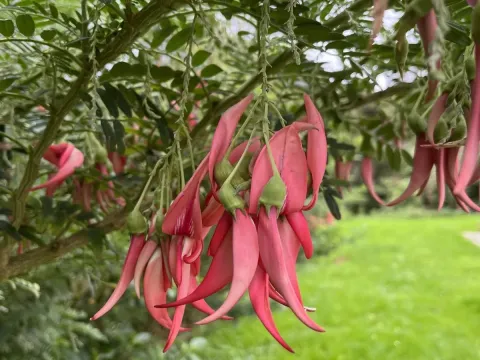
Clianthus
Clianthus
Clianthus, commonly known as the "parrot's beak," is typically propagated by seeds within a controlled greenhouse or indoor environment. Sowing is best performed in late winter or early spring.
What the section contains

Clianthus
The hard seed coat must be scarified before planting, which significantly accelerates the germination process. Soaking seeds in warm water for 24 hours also promotes uniform emergence.
Seeds are sown in a light, well-draining substrate at a depth of about 0.5 to 1 cm. Containers should be covered with glass or film to maintain consistent humidity.
The ideal temperature for germinating Clianthus seeds ranges from 20 to 22 degrees Celsius. Initial seedlings usually appear within two to four weeks after sowing.
Once the second pair of true leaves has developed, seedlings are transplanted into individual pots, taking great care to avoid damaging the delicate root system.
Clianthus belongs to the Fabaceae family and is native to New Zealand, which defines its specific requirements for cultivation conditions.
The plant prefers bright, well-lit locations but requires protection from intense midday sun, which can scorch its delicate pinnate foliage.
The soil for Clianthus must be light, fertile, and provide excellent drainage, as waterlogging is extremely detrimental to the roots.
In temperate climates, the culture is grown primarily as an ornamental greenhouse or indoor plant, as it cannot withstand freezing temperatures.
Clianthus requires moderate watering during its active growth phase and significantly less moisture during the winter dormant period.
The primary threats to Clianthus in indoor conditions are sucking pests, such as spider mites and mealybugs.
Excessive humidity in the air or soil makes the plant susceptible to fungal diseases, particularly root rots and late blight.
To prevent these issues, it is essential to provide high-quality ventilation and strictly adhere to an irrigation schedule that avoids water retention in the soil.
If pests are identified, appropriate insecticides or acaricides should be used, following the manufacturer's dosage guidelines carefully.
Regular inspection of the undersides of the leaves allows for early detection of parasite colonies, helping to prevent widespread infestation of the plant.