
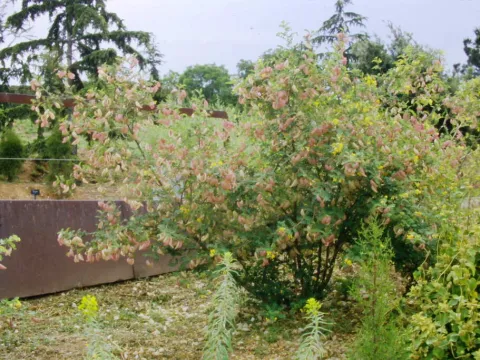
Atlas bladder senna
Colutea atlantica
Sowing seeds of the Atlas bladder senna should be carried out in the spring after a period of stratification. This preparation is essential to break dormancy and ensure a uniform germination rate across the planting area.
What the section contains
Atlas bladder senna
Seeds are sown in open soil or nursery beds at a depth of 1-2 cm. Maintaining soil moisture during the initial development stage is crucial, although the plant becomes significantly more drought-resistant as it matures.
Vegetative propagation via cuttings is also a common practice. Semi-hardwood cuttings taken during the summer months generally show good rooting potential in well-drained, sandy growing media.
When transplanting into the field, adequate spacing is required to ensure optimal airflow and light exposure. Providing a distance of at least 1.5-2 meters between shrubs prevents overcrowding and limits the spread of potential pathogens.
In the first year of growth, weeding around the young plants is necessary to reduce competition for resources. Regular mulching can also help suppress weeds while maintaining stable soil moisture levels.
The Atlas bladder senna is a member of the Fabaceae family, known for its adaptability to arid and semi-arid environments. It originates from regions in North Africa, which explains its extreme resilience.
This shrub requires full sunlight to thrive. In shaded areas, the plant tends to become leggy, loses its natural density, and produces fewer flowers, which impacts its ornamental and ecological value.
Regarding soil preferences, this species is highly tolerant of poor, stony, and lime-rich soils. A well-draining environment is mandatory, as the plant is susceptible to root rot if waterlogged conditions persist.
Climate tolerance is a strong suit for this plant, as it easily withstands intense heat and periodic droughts. Its established root system makes it an excellent choice for reclamation projects and soil stabilization.
As a legume, it contributes to soil fertility by fixing atmospheric nitrogen. This biological process reduces the need for heavy nitrogen fertilization and makes the species sustainable in various landscape and agricultural applications.
While the Atlas bladder senna is generally robust, it can be susceptible to powdery mildew, especially in locations with poor air circulation or high humidity levels during the summer months.
Pest issues often involve leaf-feeding insects, such as caterpillars or various beetles. While these usually cause only cosmetic damage, heavy infestations should be monitored to ensure the plant maintains its vigor.
Integrated pest management strategies are recommended, focusing on maintaining plant health through proper pruning and location selection. This reduces the necessity for chemical intervention significantly.
Root zone health is the most critical factor in preventing plant decline. Ensuring that the soil remains aerated and not waterlogged is the primary preventative measure against root-based pathogens.
Regular monitoring of the foliage and stems during the growing season allows for early detection of potential problems, enabling effective and minimal-impact management of both pests and diseases.