
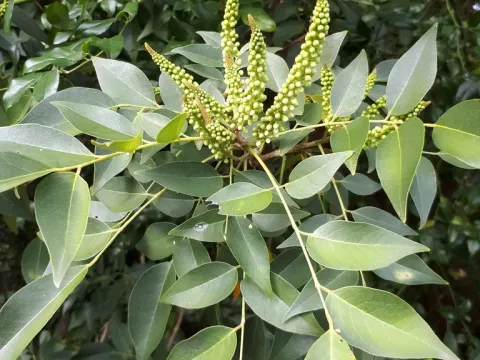
Ateleia
Ateleia
Ateleia is a genus of trees and shrubs belonging to the legume family, Fabaceae. The genus comprises approximately 30 species distributed across the tropical and subtropical regions of the Americas, ranging from Mexico through Central America to the Caribbean and northern South America.
What the section contains


Ateleia
These plants typically thrive in well-drained soils and are notably resilient to dry, seasonal climates. They are often found in dry deciduous forests, where their ability to withstand drought stress makes them a key component of the local vegetation structure.
Botanically, Ateleia is distinct due to its apetalous flowers—lacking petals—which is an unusual characteristic for the Fabaceae family. The plants produce single-seeded pods that are indehiscent, meaning they do not split open to release seeds at maturity, which aids in specific seed dispersal mechanisms.
Agronomic management of Ateleia focuses on its capacity for nitrogen fixation, which contributes to soil health in its native habitats. Planting usually involves selecting sites with adequate sun exposure and ensuring minimal waterlogging, as the species is adapted to drained forest soils.
Economically, Ateleia species are highly regarded for their dense, durable timber, which is utilized in various construction and craft applications. Furthermore, the tree is increasingly recognized for its potential in reforestation projects, as it helps stabilize soils and naturally improves nutrient cycling in degraded ecosystems.