
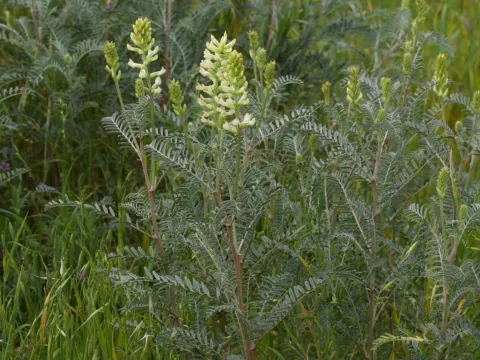
Asymmetric milkvetch
Astragalus asymmetricus
Asymmetric milkvetch (Astragalus asymmetricus) is a perennial herbaceous plant belonging to the Fabaceae family. It is native to specific regions of California, where it has evolved to thrive in arid and semi-arid environments characterized by scarce seasonal rainfall.
What the section contains
Asymmetric milkvetch
The plant is distinguished by a deep, robust root system that serves as a primary adaptation for survival in dry climates. This botanical feature allows the species to maintain physiological functions when moisture availability in the topsoil is limited, showcasing significant drought tolerance.
Agricultural success with this species depends on selecting well-drained, porous soil types. Sandy or gravelly soil compositions are preferred, as they mimic the natural habitat of the species and prevent waterlogging, which the plant cannot tolerate due to root rot sensitivity.
As a legume, it plays a vital role in nitrogen fixation. By establishing symbiotic relationships with soil bacteria, the plant effectively improves the nutrient profile of poor soils, making it an excellent candidate for land reclamation and sustainable pasture management strategies.
The cultivation requirements emphasize the need for direct, unobstructed sunlight. The plant is highly photophilous, and inadequate light exposure during the growth stage results in etiolated development and a significant reduction in biomass production and reproductive capability.