
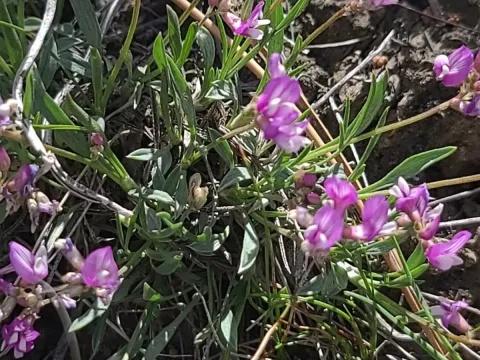
Spatulate-leaved milkvetch
Astragalus spatulatus
Spatulate-leaved milkvetch (Astragalus spatulatus) is a perennial herbaceous plant belonging to the Fabaceae family, adapted to harsh, dry environments.
What the section contains
Spatulate-leaved milkvetch
Propagation is primarily achieved through seeds. To overcome seed dormancy, cold stratification is recommended, often achieved by sowing seeds outdoors in late autumn.
Scarification of the seeds is a standard practice before planting, as it helps break the tough seed coat and ensures more uniform and rapid germination.
The seeds should be sown in a well-draining, sandy or gravelly substrate. A depth of approximately 0.5 centimeters is ideal for successful seedling emergence.
Growth during the first season is relatively slow, as the plant prioritizes the development of a deep taproot system to support its survival in dry conditions.
This species is native to rocky and arid regions of North America, making it perfectly suited for xeriscaping and rock garden applications.
Full sun exposure is a mandatory requirement for Astragalus spatulatus. Insufficient light leads to etiolation and weakens the plant's structural integrity.
The soil must be exceptionally well-drained. The plant thrives in poor, alkaline, or neutral soils and struggles in heavy, moisture-retentive clay substrates.
Temperature tolerance is a hallmark of this plant. It is highly resistant to both extreme cold and intense summer heat, provided there is sufficient air circulation.
Fertilization should be avoided or kept to a bare minimum. Excess nitrogen stimulates rapid leaf growth at the expense of root health and longevity.
The primary threats to the health of this milkvetch are root rot diseases, which occur almost exclusively in conditions of excessive moisture or poor drainage.
Fungal infections can spread rapidly in humid conditions, especially if the plants are crowded and lack proper airflow between the foliage.
Insects such as mites may attack the plant during extended periods of drought, potentially leading to leaf yellowing and a decline in overall vigor.
Root-feeding pests can compromise the plant's ability to take up water, making it more susceptible to secondary pathogens and wilting.
Maintenance of an appropriate irrigation schedule and careful monitoring for early signs of distress are the best strategies for ensuring plant longevity.