
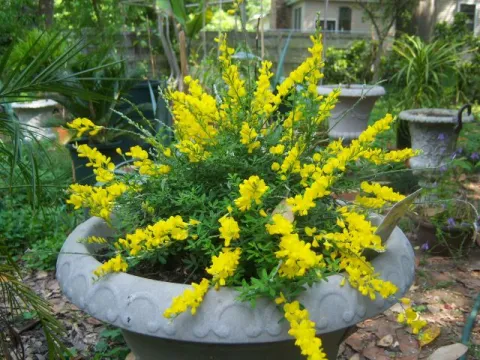
Spach broom
Cytisus spachianus
Spach broom (Cytisus spachianus) is a perennial, evergreen or semi-evergreen shrub that belongs to the Fabaceae family. Originating from the Canary Islands, this plant is well-adapted to Mediterranean-type climates and warm, sunny environments.
What the section contains
Spach broom
The plant requires well-draining soil to thrive. It is highly sensitive to waterlogged conditions, which can lead to root rot; therefore, providing an excellent drainage system is the most critical factor for successful cultivation.
Botanically, it is characterized by slender, green, reed-like branches that bear small, trifoliate leaves. During the spring, the shrub produces a profusion of bright yellow, fragrant pea-like flowers that cover the entire crown, creating a spectacular visual effect.
Regarding climate, it is not frost-tolerant. In cooler regions, it is typically grown as a container plant, allowing it to be moved to a greenhouse or a cool indoor location during the winter months to avoid freezing damage.
In terms of agricultural and horticultural use, Spach broom is prized as an ornamental plant. It is commonly utilized in landscaping to provide color in rock gardens, borders, and as a focal point in terrace gardening due to its compact habit.
The most common disease affecting Spach broom is powdery mildew, which often appears when the plant is kept in areas with high humidity and poor airflow around the foliage.
Pest pressures primarily include aphids, which frequently infest new shoots and flower buds, as well as spider mites, which can be particularly problematic for plants kept in indoor or greenhouse conditions where the air is dry.
To mitigate these risks, ensure that the shrub is planted in a location with good air circulation and follow a regular pruning schedule to remove dead or dense growth that may harbor pests.
If an infestation occurs, horticultural soaps or targeted insecticides may be used, although caution should be exercised to protect local pollinator populations during the flowering season.
Regular monitoring of the leaf undersides and the stem tips will help in early detection of potential threats, allowing for prompt intervention before the plant's aesthetic value is compromised.