
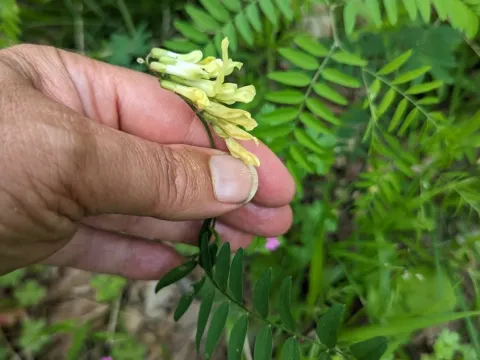
Sparse-flowered vetch
Vicia sparsiflora
Sparse-flowered vetch (Vicia sparsiflora) is a member of the Fabaceae family. As a herbaceous plant, it is recognized for its potential as a forage legume, contributing nitrogen to the soil and providing valuable biomass for livestock feed.
What the section contains
Sparse-flowered vetch
The optimal sowing time is early spring, once the soil temperature is consistently above 5 degrees Celsius. Early planting ensures that the seeds benefit from spring soil moisture, which is critical for rapid germination and establishment.
Seeds should be sown at a depth of 3–5 centimeters to protect them from birds and surface desiccation while ensuring they have enough energy to emerge. Proper seed-bed preparation is essential for a uniform stand.
Row spacing is typically determined by local machinery, but narrow rows are often preferred to ensure even coverage. Using a companion crop, such as a cereal grain, can provide structural support, preventing the vetch from lodging.
In regions with milder climates, late autumn sowing can be attempted, provided that the soil temperature is low enough to prevent premature germination before the onset of winter frosts.
This crop thrives in well-drained, fertile soils with a neutral pH. It is particularly sensitive to waterlogging, so fields with poor drainage should be avoided to prevent root rot and stunted plant growth.
Vicia sparsiflora performs best in temperate climates where temperatures remain moderate during the active growing season. While it exhibits some frost tolerance, extreme cold can damage young seedlings.
Adequate sunshine is vital for the development of healthy biomass. Excessive shading, whether from dense weed growth or high crop density, negatively impacts photosynthesis and reduces the nutritional quality of the forage.
Soil nutrient status should be managed through balanced fertilization. While nitrogen application is rarely required due to the plant's symbiotic nitrogen-fixing abilities, phosphorus and potassium levels must be sufficient for seed and biomass development.
Maintaining soil structure is important, as the plant prefers loose, crumbly soil textures. Conservation tillage practices can help improve soil organic matter, which in turn supports the beneficial rhizobia bacteria vital for vetch.
The crop is susceptible to common legume diseases, such as powdery mildew and various fungal leaf spots. These are most problematic during seasons characterized by high humidity and stagnant air conditions.
Insect pests, including the pea leaf weevil and various aphid species, can significantly impact yield. These insects not only damage vegetative tissue but can also act as vectors for viral diseases within the crop stand.
A rigorous crop rotation schedule is the most effective management strategy against soil-borne pathogens. Integrating Vicia sparsiflora into a 4-year rotation cycle prevents the build-up of specific fungi and pests in the soil.
Integrated Pest Management (IPM) should be prioritized. This involves monitoring pest populations and using biological controls or selective insecticides only when economic thresholds are exceeded, minimizing impact on beneficial pollinators.
Healthy seed stock is the foundation of a successful crop. Using certified, fungus-free seeds and performing pre-sowing treatments significantly reduces the risk of early-season infection and ensures a robust start for the plant.