
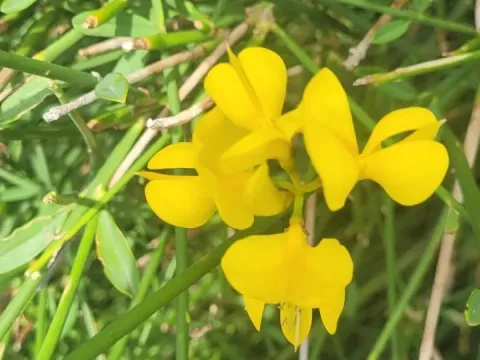
Spanish broom
Spartium L.
Spanish broom (Spartium L.) is a monotypic genus of perennial flowering shrubs belonging to the Fabaceae family. It is renowned for its vibrant yellow flowers and long, green, photosynthesis-capable stems that give it a unique appearance.
What the section contains

Spanish broom
The plant originates from the Mediterranean region and is highly adapted to sunny, dry environments. It thrives in well-drained, nutrient-poor, and slightly alkaline or neutral soils, making it an ideal choice for challenging rocky landscapes.
Cultivation requires significant exposure to sunlight to ensure healthy blooming and wood maturation. It is moderately hardy, and while it withstands heat, it requires protection from severe frosts and strong, drying winter winds.
Water requirements are minimal once the plant is established, as it is naturally drought-tolerant. Irrigation should be managed carefully to avoid waterlogging, which significantly increases the risk of root pathogens.
Standard horticultural practice includes pruning annually after the flowering period concludes. This process encourages dense growth and keeps the plant from becoming excessively woody or sparse at the base.
Historically, Spanish broom served as a vital industrial plant. Its flexible and durable branches were harvested to extract fibers used in the production of ropes, textiles, and various cordage products.
In modern agriculture, its primary utility is in erosion control. The robust root system stabilizes steep, sandy slopes and degraded land, preventing topsoil loss and promoting better land management.
The plant is highly valued for its nitrogen-fixing capabilities, which improve soil fertility over time. This makes it a useful component in permaculture designs and soil restoration projects in semi-arid climates.
The flowers are aromatic and contain essential oils utilized in the perfume industry. Additionally, the plant serves as a significant nectar source for pollinators, supporting biodiversity in agricultural ecosystems.
Ongoing research is exploring the medicinal properties of its seeds and leaves, which contain specific alkaloids. These could potentially lead to new applications in pharmacological development and natural pest control solutions.
The primary threats to Spartium health are fungal infections associated with poor drainage and excessive ambient humidity. Root rot is the most common cause of premature decline in cultivated plantations.
Common pests include aphids and spider mites, which can proliferate on young stems during dry spells. Integrated pest management strategies, focusing on biological controls, are preferred to maintain plant vigor.
Nitrogen-rich soils or excessive fertilization can lead to overly rapid, succulent growth that is more susceptible to insect attack. Maintaining a balanced nutrient profile is crucial for long-term health.
Proper sanitation is essential for managing disease risks. Removing dead or damaged branches during the winter cleaning phase helps minimize the surface area for spore germination and viral transmission.
In areas where broom is susceptible to viral blight, identifying and removing symptomatic plants immediately is the best way to prevent the rapid spread of infections throughout the entire shrub population.