
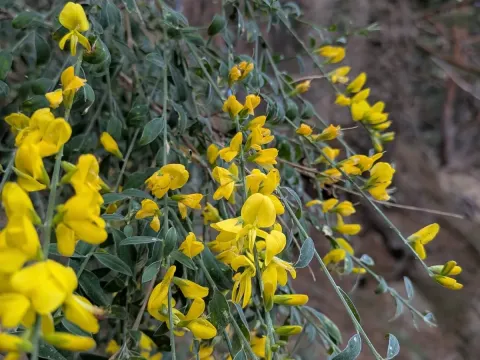
Spanish broom
Genista florida
Genista florida, commonly referred to as a type of broom, is a perennial shrub belonging to the Fabaceae family. This species is native to the Iberian Peninsula, where it thrives in rugged, mountainous terrains and open scrublands.
What the section contains
Spanish broom
The crop is highly adapted to poor, sandy, or rocky soils with good drainage capacity. It is essential to ensure that the site is not prone to waterlogging, as the root system of Genista florida is highly susceptible to rot under excessively damp conditions.
Sunlight exposure is a critical factor for this plant; it requires full sun to maintain its structural integrity and produce its characteristic golden-yellow inflorescences. Shaded locations result in leggy growth and reduced flowering performance.
As a legume, it contributes to soil fertility by fixing atmospheric nitrogen, making it an excellent candidate for ecological restoration projects or land reclamation in nutrient-poor environments. It demonstrates significant tolerance to drought once established.
Agricultural and landscape use includes its function as a decorative plant in xeric gardens and as a supporting plant for pollinators. Its deep root system also aids in soil stabilization on slopes, preventing erosion in arid landscapes.
Fungal pathogens represent the most significant threat to Genista florida, particularly in regions with high air humidity. Powdery mildew can affect the foliage if there is insufficient air circulation around the canopy.
Aphids are the primary pests that target the plant during the spring flush of new growth. While they rarely kill mature plants, heavy infestations can weaken the shrub, making it necessary to monitor the garden closely for potential outbreaks.