
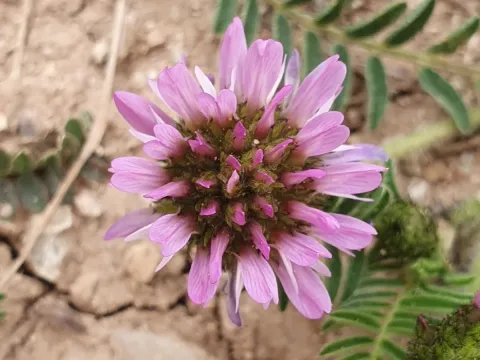
Astragalus glaux
Astragalus glaux
Astragalus glaux is a perennial legume member of the Fabaceae family, recognized for its adaptability to harsh environments. Sowing should ideally occur in early spring when the soil temperature consistently reaches 5–10 degrees Celsius.
What the section contains
Astragalus glaux
Due to the hard seed coat typical of many Astragalus species, seed scarification is highly recommended before planting to ensure uniform and rapid germination rates across the field.
Seeds should be sown at a shallow depth of approximately 1 to 2 centimeters to provide the seedling with enough energy to emerge efficiently without being exhausted by deep burial.
Row spacing is typically set at 30–45 centimeters to provide sufficient space for plants to develop their root systems while facilitating light mechanical weeding during the establishment phase.
In regions with dry spring seasons, light irrigation immediately following sowing or pressing the soil with a roller can significantly improve emergence and seedling vigor.
This species is highly drought-tolerant, making it an excellent candidate for the reclamation of arid, degraded, or saline soils where traditional agricultural crops struggle to survive.
Astragalus glaux thrives in well-drained, sunny locations. It has a marked preference for sandy or loamy soils but shows remarkable resilience on rocky substrates with limited organic matter.
Waterlogging is a major threat to this crop; therefore, site selection must avoid low-lying areas or heavy clay soils prone to water retention, which can lead to rapid root rot.
The plant demonstrates excellent cold hardiness, allowing it to survive extreme winter temperatures, provided that the soil is not waterlogged during the freezing cycle.
As a nitrogen-fixing plant, it improves soil fertility over time, reducing the need for synthetic nitrogen fertilizers in subsequent crop rotations involving cereal or other sensitive species.
Fungal diseases represent the most significant threat to plant health, particularly mildew and rust, which become prevalent under conditions of high humidity and poor field ventilation.
Nodule weevils are among the primary insect pests affecting the crop, as they feed on foliage and can severely impact the initial development of young seedlings in the first season.
Aphid infestations during the flowering stage can significantly decrease seed yields by extracting vital sap and transmitting viral diseases, which can weaken the plant stand for the following year.
Integrated pest management strategies should focus on scouting for early signs of damage and applying biological or chemical treatments only when pest populations exceed defined economic thresholds.
Good agricultural practices, including maintaining proper plant density and removing surrounding weeds that may act as hosts for pests, are essential for long-term successful management of the crop.