
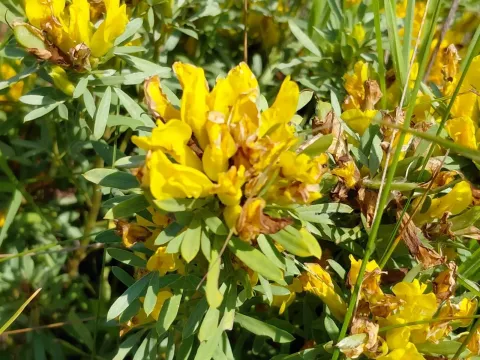
Austrian broom
Cytisus austriacus
Austrian broom (Cytisus austriacus) is a perennial semi-shrub belonging to the Fabaceae family. It is known for its compact growth habit and vibrant yellow flowers that bloom in terminal clusters during late spring and early summer.
What the section contains
Austrian broom
Native to Central and Southeastern Europe, this plant is naturally adapted to dry grasslands, rocky slopes, and open woodlands. Its evolutionary background makes it an excellent choice for regions with limited rainfall and high solar exposure.
Cultivation of Cytisus austriacus requires well-drained, nutrient-poor, or sandy soils. It thrives in slightly alkaline to neutral pH conditions. Heavy, clay-rich soils that retain moisture should be amended with grit or sand to prevent root rot.
The plant demonstrates significant drought tolerance once established. Its deep root system allows it to survive in harsh conditions, making it an ideal candidate for soil stabilization on steep banks and erosion-prone slopes.
In terms of agricultural value, it serves as a valuable nectar source for bees and other pollinators. It is widely used in xeriscaping and sustainable garden designs due to its low water requirements and minimal maintenance needs after the first year of planting.
Like many legumes, the Austrian broom is susceptible to fungal issues, particularly powdery mildew, which can occur if the plant is grown in areas with poor air circulation or excessively high humidity.
Insect pests such as broom moths, leaf beetles, and weevils can cause significant foliage damage if left unmonitored. Early detection is essential for effective biological or chemical control.
Root rot is the most serious threat, usually caused by overwatering or planting in soil with inadequate drainage. Proper irrigation management is the primary defense against this condition.
Sanitation practices, including the removal of dead or diseased branches, help in maintaining the overall health and vigor of the shrub throughout the growing season.
Gardeners must be aware that all parts of the plant are poisonous if ingested. Proper signage and careful site selection are necessary to protect pets and local wildlife from consumption.