
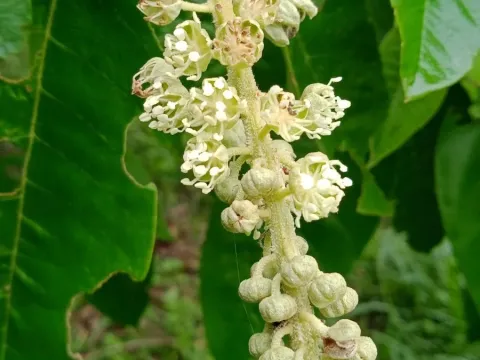
Croton floribundus
Croton floribundus
Croton floribundus is an ecologically significant tree species belonging to the Euphorbiaceae family. It is native to the tropical forests of South America, primarily documented in Brazil, where it serves as a key pioneer species in forest succession.
What the section contains
Croton floribundus
The plant thrives in humid tropical environments, requiring consistent temperatures and high rainfall levels typical of its native range. It is well-adapted to the climatic conditions of secondary tropical forests, contributing to canopy cover.
In terms of soil requirements, this species shows a preference for deep, fertile, and well-drained soils. While it can tolerate various substrates, optimal growth is achieved in soils with high organic matter content, which supports its rapid vertical development.
Agricultural management for this crop involves careful site preparation and management of competing vegetation during the seedling phase. As a light-demanding species, Croton floribundus performs best when granted adequate access to direct sunlight.
Economically, the tree is recognized for its utility in reforestation projects due to its fast growth rate and ability to stabilize soil. Additionally, its wood and chemical compounds are utilized in local timber industries and scientific research.
Pathogens affecting Croton floribundus primarily include various fungal species that thrive in the high-humidity environment of tropical forests, often impacting the foliage and bark.
Insect pests, including various leaf-eating beetles and moth larvae, represent a potential threat to young plantations, as they can significantly reduce the photosynthetic capacity of the plants.
Effective pest management involves maintaining appropriate planting distances to ensure good air circulation, which helps reduce the incidence of fungal diseases in the field.
Integrated pest management strategies are often employed to monitor the population of potential pests, ensuring that the health of the tree population remains robust without excessive reliance on pesticides.
Proactive monitoring of the forest canopy and ground conditions is essential for detecting outbreaks early, thereby minimizing potential damage to the developing timber crop.