
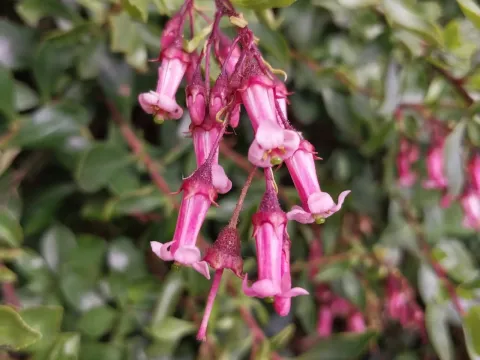
Escallonia
Escallonia
Escallonia is a genus of evergreen shrubs belonging to the Escalloniaceae family. Originating from the mountainous regions of South America, specifically Chile and Argentina, these plants have adapted to diverse climates but thrive best in temperate zones.
What the section contains
 Escallonia alpina
Escallonia alpina
Escallonia alpina
 Escallonia exoniensis
Escallonia exoniensis
Escallonia exoniensis
 Escallonia hybrids
Escallonia hybrids
Escallonia hybrids
 Escallonia paniculata
Escallonia paniculata
Escallonia paniculata
 Escallonia pendula
Escallonia pendula
Escallonia pendula
 Escallonia pulverulenta
Escallonia pulverulenta
Escallonia pulverulenta
 Escallonia resinosa
Escallonia resinosa
Escallonia resinosa
 Escallonia revoluta
Escallonia revoluta
Escallonia revoluta
 Escallonia rigida
Escallonia rigida
Escallonia rigida
 Escallonia rosea
Escallonia rosea
Escallonia rosea
 Escallonia virgata
Escallonia virgata
Escallonia virgata
 Escallonia viscosa
Sticky Escallonia
Escallonia illinita
Escallonia viscosa
Escallonia viscosa
Sticky Escallonia
Escallonia illinita
 White escallonia
Escallonia bifida
White escallonia
Escallonia bifida
Escallonia
For optimal growth, Escallonia requires a sunny location sheltered from cold, drying winds. It performs best in fertile, well-drained loamy soils with a pH ranging from neutral to slightly acidic, as the plant is highly sensitive to waterlogged conditions.
In terms of climate, Escallonia is generally considered half-hardy. While some varieties can withstand mild winters, prolonged frost below -10°C can cause significant branch damage, necessitating winter protection or pot cultivation in colder regions.
The botanical characteristics of Escallonia include glossy, serrated, evergreen leaves and clusters of tubular, fragrant flowers. The blooming period typically spans from early summer through autumn, providing extended aesthetic appeal.
In landscaping, Escallonia is widely used for creating dense hedges and windbreaks due to its rapid growth and ability to withstand repeated shearing. It is a preferred choice for coastal gardens, as it shows good tolerance to salt spray.
Escallonia leaf spot, caused by the fungus Septoria escalloniae, is the primary threat to the plant's health. It presents as dark spots on the foliage, often resulting in defoliation if left untreated during humid weather.
Powdery mildew can also affect the shrubs, particularly when plants are crowded or lack sufficient airflow. Maintaining adequate spacing during planting and pruning for better internal air circulation is essential for disease prevention.
Aphids are the most common insect pests, frequently colonizing the tender new growth in spring and summer. They can cause leaf curling and serve as a vector for secondary infections by promoting sooty mold growth on their honeydew secretions.
Root rot, often associated with poor soil drainage, can lead to sudden plant death. It is critical to ensure that planting sites have excellent permeability to prevent water from pooling around the root crown.
Regular maintenance, including the removal of dead or crossing branches, is necessary to keep the shrub vigorous. This practice prevents the accumulation of moisture within the center of the plant, thereby reducing the likelihood of fungal outbreaks.