
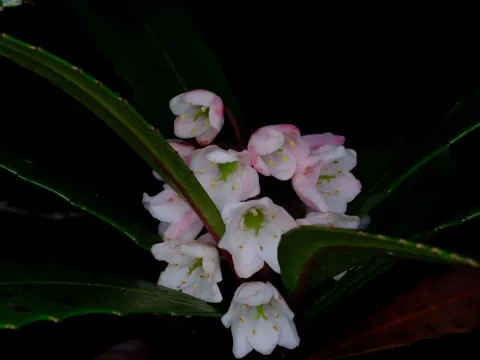
Anopterus
Anopterus Labill.
Anopterus is an evergreen shrub or small tree belonging to the family Escalloniaceae. Native to the cool, moist forests of Tasmania, this plant is valued for its lush foliage and attractive flower clusters.
What the section contains

Anopterus
The plant requires well-drained, acidic soil rich in organic matter. Proper drainage is absolutely critical, as the roots are highly susceptible to rot if allowed to sit in stagnant water, especially in clay-based soils.
Climatic requirements focus on cool to temperate conditions. Anopterus performs best in partial shade, as intense sunlight can scorch its thick, leathery leaves. It requires protection from harsh, dry winds and freezing temperatures.
Botanically, it is characterized by serrated leaf edges and pendulous racemes of white or pink bell-shaped flowers. Its growth habit is relatively slow, making it a suitable candidate for container gardening in temperate regions.
In terms of usage, Anopterus is primarily cultivated as an ornamental specimen in botanical gardens and shaded landscape designs. Its unique appearance makes it a favorite for collectors of rare Australasian flora.
Scale insects and mealybugs are the most common pests affecting Anopterus. These insects thrive in sheltered environments, feeding on sap and often leading to stunted growth if left unmanaged.
Fungal diseases, including leaf spot and various rots, are significant threats. These typically occur when the plant is kept in humid conditions with poor ventilation, which prevents the foliage from drying correctly.
Root rot is the most lethal condition for Anopterus, usually caused by overwatering or poor soil structure. Maintaining a rigorous watering schedule and checking the moisture level of the substrate is vital.
Integrated pest management is recommended, starting with manual removal of visible pests followed by insecticidal soaps if necessary. Keeping the growing area clean of debris helps prevent fungal outbreaks.
Environmental stress, such as exposure to hot, dry air, significantly increases the plant's susceptibility to infestations. Consistent care and stable environmental conditions are the best defenses against biological threats.