
White escallonia
Escallonia bifida
Description
Growing requirements
White escallonia (Escallonia bifida) is an evergreen shrub belonging to the Escalloniaceae family. Native to South America, particularly Argentina and Brazil, this plant thrives in temperate regions with mild winters and consistent moisture levels.
The climate requirements for this species are specific: it prefers temperate environments where it is protected from harsh freezing temperatures. It is often used in coastal gardens due to its ability to withstand salty sea breezes and moderate wind exposure.
For optimal growth, the soil must be well-drained, fertile, and slightly acidic to neutral. Heavy clay soils that retain excess moisture can lead to root rot, so proper site preparation with organic matter is essential for establishing the plant.
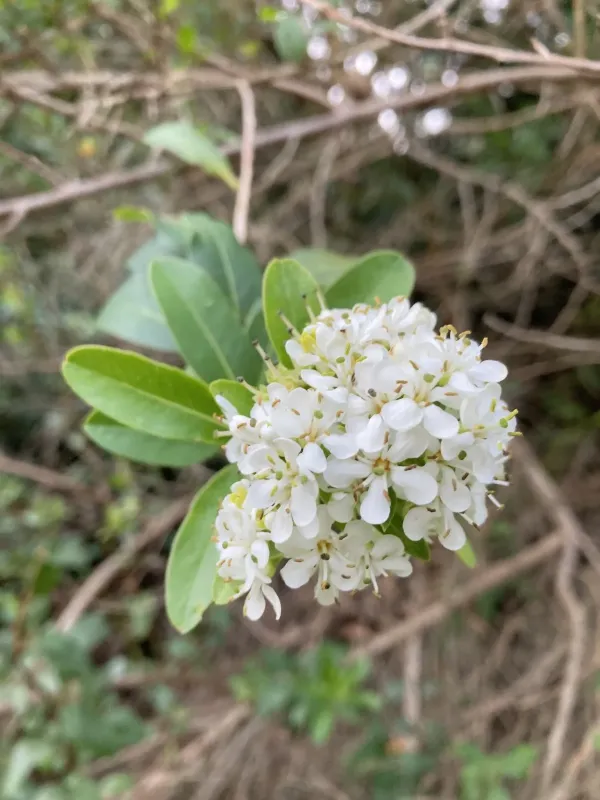
Botanically, it features leathery, dark green foliage and produces elegant, white, star-shaped flowers arranged in large panicles. Its natural growth habit is dense and bushy, making it an excellent candidate for formal hedges or screen plantings.
In landscape management, this plant is used primarily for decorative purposes. It is highly valued for its long flowering season and its structural utility as a formal or informal hedge in appropriate climate zones.
Main diseases and pests
Typical pests include scale insects and spider mites, which tend to infest the plant, especially during periods of low humidity or drought stress.
Fungal issues like leaf spot or powdery mildew can occur if the shrub is planted in an area with poor airflow and high humidity, leading to stagnant moisture on the leaves.
Effective management includes maintaining adequate space between shrubs and performing regular pruning to ensure sunlight and air reach the center of the plant.
When pest populations reach economic thresholds, horticultural oils or appropriate insecticides can be used to control the infestation without harming the plant's foliage.
Sanitation is key; removing fallen leaves and dead wood from the base of the plant reduces the risk of overwintering pathogens that could cause recurring infections.