
Escallonia exoniensis
Escallonia exoniensis
Description
Growing requirements
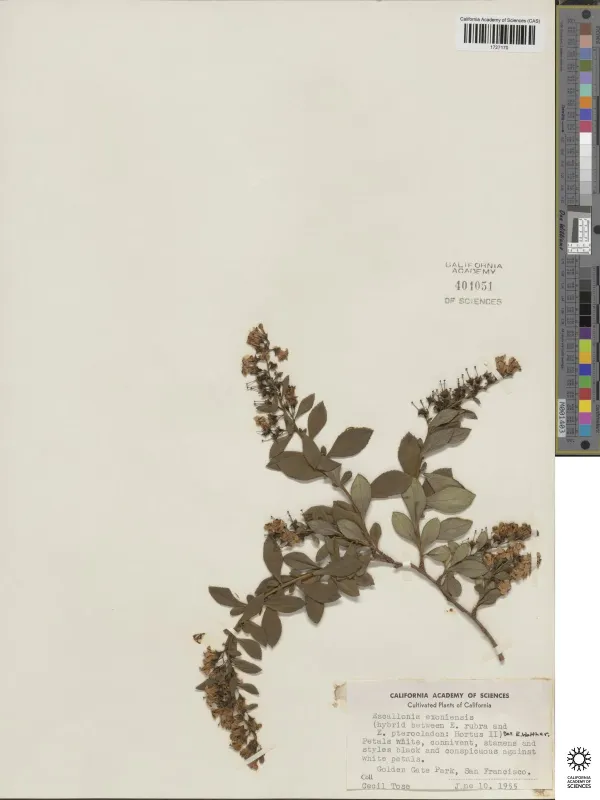
Escallonia exoniensis is a robust, evergreen hybrid shrub belonging to the Escalloniaceae family. Originating as a cross between E. rosea and E. rubra, this plant has gained popularity in temperate regions for its glossy foliage and abundant terminal panicles of small, tubular flowers.
This species thrives in mild, maritime climates. While it is relatively hardy, it generally requires protection from severe frosts in colder regions. Providing a sheltered position, such as against a south-facing wall, can significantly increase its survival rate during winter months.
The ideal planting site should offer full sun or light dappled shade. Exposure to direct sunlight is essential for stimulating flower production and maintaining the dense, bushy growth habit characteristic of this evergreen cultivar throughout the entire growing season.
Regarding soil requirements, this plant is adaptable but performs best in fertile, well-draining loams. It is vital to avoid waterlogged conditions, as the root system is highly susceptible to decay in heavy, compacted soils that do not allow for sufficient oxygen exchange.
Routine cultural practices include annual pruning immediately after flowering to shape the shrub and promote vigorous new growth. During dry summer periods, supplementary irrigation and the application of organic mulch around the base help retain soil moisture and stabilize root temperatures.
Main diseases and pests
Common pests include aphids and spider mites, particularly in hot and dry weather conditions. These insects tend to colonize the undersides of leaves and the tips of tender new growth, requiring consistent monitoring and prompt intervention with insecticidal soaps or oils.
Leaf spot is a frequent fungal concern, often exacerbated by poor air circulation and excessive moisture on the foliage. Maintaining adequate spacing between plants and performing regular sanitation pruning are the most effective non-chemical strategies for disease management.
Chlorosis is frequently observed when the plant is situated in alkaline soils. This condition hinders the uptake of micronutrients, particularly iron, leading to visible yellowing of the foliage. Soil amendment with organic acidifiers or chelated iron can restore the plant's vigor.
Root rot, often caused by Phytophthora species, is a serious threat associated with saturated soils. Once the root system is compromised, the shrub may exhibit sudden wilting, even in the presence of adequate moisture, necessitating improved drainage solutions.
- Monitor leaf discoloration regularly.
- Ensure irrigation is applied at the root zone, not the foliage.
- Remove and destroy any infected plant debris immediately.
- Use sterilized pruning equipment to prevent cross-contamination.