
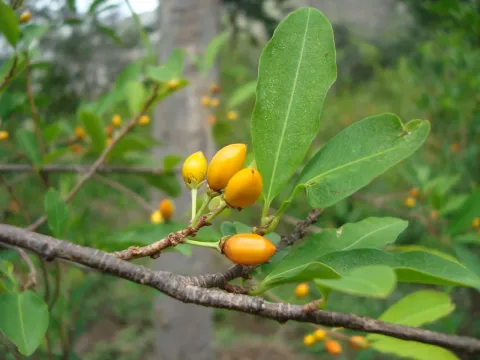
Erythroxylum novogranatense
Erythroxylum novogranatense
Propagation of Erythroxylum novogranatense is primarily achieved through vegetative methods or the sowing of fresh seeds. Because seeds lose viability rapidly, they must be planted immediately after collection in a moisture-rich substrate.
What the section contains
Erythroxylum novogranatense
Seedlings are nurtured in nurseries with controlled temperature and protection from direct sunlight. Transplanting to the permanent site occurs when plants reach 20–30 centimeters in height, typically timed with the onset of the rainy season.
A standard planting density involves spacing shrubs 1.5–2 meters apart to ensure adequate airflow. This spacing is vital to minimize the risk of fungal outbreaks in the high-humidity environments where the crop thrives.
In commercial operations, plantations are designed with specific orientations to balance sun exposure. During the initial months of establishment, young plants require shade to prevent leaf scorch from intense ultraviolet radiation.
As a perennial evergreen shrub, the crop remains productive for 20–30 years provided that proper pruning and soil management practices are consistently followed throughout the life cycle of the plantation.
Erythroxylum novogranatense is a tropical plant requiring consistently high temperatures throughout the year. It thrives in the range of +20°C to +30°C; growth significantly slows if temperatures drop below +15°C.
The crop prefers deep, well-draining acidic to neutral loam soils. Soil saturation or waterlogging is highly detrimental to root health, making the installation of effective drainage systems mandatory on heavy or clay-rich soils.
The plant responds well to systematic applications of organic fertilizers rich in nitrogen and potassium to support rapid foliage development. In regions with frequent tropical rains, careful management is required to prevent leaching of nutrients from the root zone.
Native to the Andean foothills, the novogranatense variety is specifically adapted to somewhat drier, lower-altitude conditions compared to other species. Despite this, consistent soil moisture is essential to maintain high-quality leaf yield.
High levels of diffused sunlight are ideal for optimal development. Direct, harsh mid-day sun can lead to leaf curling, necessitating the use of natural canopy cover or artificial shade structures to maintain plant vigor.
The primary agricultural product is the leaf, harvested exclusively by hand. The first significant harvest typically occurs 12–18 months after the initial planting, once the shrub has achieved sufficient structural maturity.
Yield is influenced by the age of the plant, water availability, and management intensity. During peak production years, which usually begin around year three, the plants can be harvested three to four times per year.
Annual output per hectare varies depending on plantation density and soil fertility. Quality is measured by the alkaloid content, which is directly correlated to the plant's health, sun exposure, and the timing of the harvest.
Formative pruning is required after every harvest cycle to stimulate the production of new lateral branches. Without rigorous height control, the shrubs become excessively leggy, which significantly hinders the efficiency of manual harvesting.
The quality of the final product depends not only on the genetic potential of the cultivar but also on proper post-harvest drying, which must occur in a shaded, well-ventilated area to preserve the chemical profile of the leaves.
Fungal pathogens such as leaf rust and powdery mildew pose the greatest risk to the crop, especially during prolonged wet weather. Broad-spectrum fungicides are utilized as a management tool to prevent extensive foliage damage.
Leaf-eating insects, including various moth larvae and beetle species, are the most common pests. Damage to the leaf surface not only reduces the market value of the product but also creates entry points for secondary bacterial or fungal infections.
Root rot often occurs due to poor irrigation management or the use of poorly drained, boggy soils. Preventive strategies focus on strict moisture control and selecting sites with natural slopes to ensure excess water runoff.
Soil-borne nematodes can severely impact the root system, leading to stunted plant growth. Management is difficult and often requires long-term crop rotation cycles or the use of specialized nematicides before establishing new planting rows.
Maintaining clean inter-row spaces by removing weeds is essential to prevent pest buildup. Any plant tissue showing signs of infection or infestation must be removed and destroyed immediately to prevent the spread of disease.
Harvesting is a labor-intensive process requiring precision. Only manual harvesting is suitable, as machine harvesting damages the delicate leaves, causing premature oxidation and a loss of aesthetic and chemical quality.
Leaves are considered mature when they turn a deep, dark green and exhibit brittleness when folded. Timing is critical, as allowing leaves to over-mature results in a significant reduction in the desired chemical compounds.
Harvested material is transported immediately to processing facilities. Keeping fresh leaves in large piles is strictly prohibited, as this promotes rapid fermentation and self-heating, which ruins the quality of the raw material.
The drying process must be carried out in a shaded area with excellent airflow, avoiding direct sunlight which degrades the active compounds. Leaves are laid out in thin layers on tiered mesh racks to ensure uniform drying.
Once dried, the product undergoes sorting to remove debris, stems, and damaged fragments. The final product is stored in airtight containers to protect it from humidity, environmental contaminants, and storage pests.