
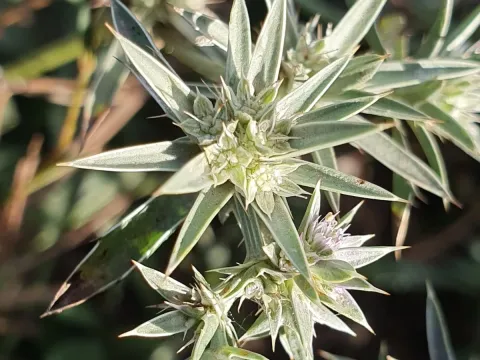
Eryngium barrelieri
Eryngium barrelieri
Eryngium barrelieri is a member of the Apiaceae family. It is a perennial herbaceous plant native to the Mediterranean region, with its natural range primarily encompassing Italy and parts of North Africa.
What the section contains
Eryngium barrelieri
This crop thrives in open, sunny locations with direct sunlight. It is highly drought-tolerant, making it an excellent candidate for agricultural production in arid environments or areas with limited water resources.
Soil requirements focus on excellent drainage and light texture. Sandy or stony soils are preferred to ensure that roots do not remain waterlogged, which is vital for the plant's health and longevity.
The plant features a deep taproot system, which helps it extract water from deeper soil horizons. Because of this, it is well-adapted to nutrient-poor soils and does not require intensive fertilization programs.
In terms of climate, it prefers moderate temperatures. While it has some level of cold tolerance, it is best suited for climates that do not experience prolonged, freezing, and extremely wet winter conditions.
Sowing should ideally occur in the spring when soil temperatures allow for reliable germination. Fall sowing is also an option in regions with mild winters to allow for natural stratification of the seeds.
Seeds should be sown at a depth of 1-2 centimeters. If starting in a greenhouse, use well-draining potting mix and maintain moderate humidity until emergence is complete.
Maintain a spacing of 40–50 centimeters between individual plants to ensure proper air circulation. Proper spacing is essential to reduce the risk of diseases caused by humidity buildup.
Early stage development is relatively slow, making weed control a priority in the first few months. Mechanical or manual weeding is recommended until the crop establishes a strong canopy.
Once established, the crop is low-maintenance. Regular irrigation is only necessary during the initial growth stages; thereafter, the plant is typically capable of surviving on natural rainfall.
The primary use of Eryngium barrelieri is in the ornamental and dried flower industry, as well as limited applications in herbal medicine due to its chemical properties.
For ornamental purposes, harvesting occurs when the inflorescences are fully mature and vibrant. Stems should be cut and dried in a cool, dark, and well-ventilated area to preserve their color.
Seed harvesting is conducted when the flower heads turn brown and begin to dry naturally. It is important to harvest before the seeds disperse due to natural dehiscent mechanisms.
The plant serves as a valuable nectar source for beneficial insects. Incorporating it into a farm landscape can boost biodiversity and improve the pollination rates of nearby crops.
Maintenance at the end of the season involves cutting the stems back. This practice helps the plant conserve energy and ensures vigorous regrowth for the subsequent growing season.