
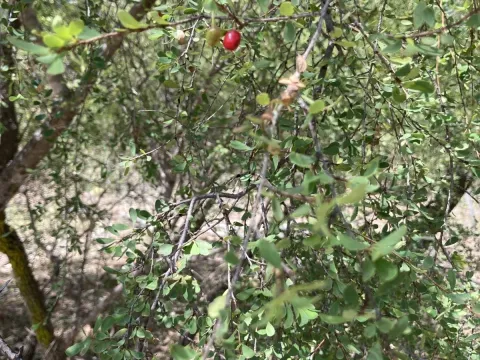
Australian erythroxylum
Erythroxylum australe
Australian erythroxylum (Erythroxylum australe) is an evergreen shrub belonging to the Erythroxylaceae family. Native to Australia, it primarily inhabits coastal scrublands and dry rainforest margins across the northeastern parts of the continent.
What the section contains
Australian erythroxylum
This species thrives in warm, humid climates and prefers well-draining soil structures. While it shows some tolerance for different soil types, sandy loams that provide adequate aeration are considered optimal for its development.
In terms of light exposure, the plant performs best in locations that receive full sun to partial shade. Ensuring protection from strong, desiccating winds is crucial for maintaining the plant's structural integrity and leaf health.
Botanically, it is recognized for its glossy, dark green leaves and small, fragrant white flowers that bloom in clusters. The fruit appears as a drupe, which turns bright red upon ripening, providing an aesthetic contrast to the foliage.
Its хозяйственное usage is primarily focused on horticulture and environmental landscaping. It is highly valued as a hardy plant for coastal gardening due to its resilience to salt-laden winds and moderate moisture levels.
The Australian erythroxylum is susceptible to common garden pests such as scale insects. These insects attach to stems and leaves, extracting plant sap and leading to a significant loss of vigor in affected specimens.
Root rot is the most serious threat, especially in soils that lack proper drainage. Consistent waterlogging promotes the growth of Pythium or Phytophthora fungi, which can destroy the root system within a short period.
Leaf-eating caterpillars may occasionally target young growth during the spring flush. Although usually not fatal, severe defoliation can hinder the plant’s ability to photosynthesize effectively during critical growth phases.
Sooty mold can develop as a secondary issue following infestations by aphids or mealybugs. The mold itself does not directly kill the plant but reduces light absorption by covering the leaf surface.
Cultural control, including proper spacing and sanitation, is the first line of defense against most threats. Regularly removing debris from beneath the shrub helps lower the population of potential soil-borne pathogens.