
Purple epacris
Epacris purpurascens
Description
Growing requirements
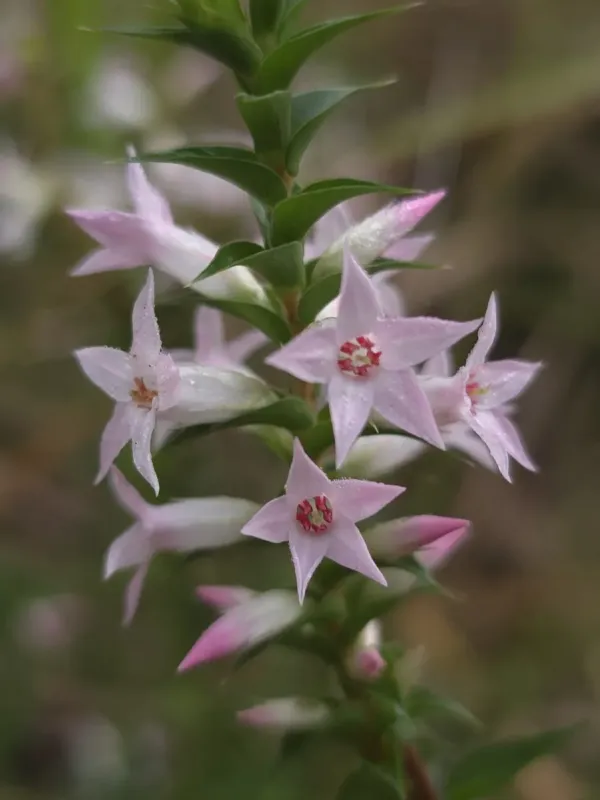
Purple epacris (Epacris purpurascens) is an evergreen ornamental shrub belonging to the Ericaceae family. It is native to the coastal regions of New South Wales, Australia, where it thrives in heathland habitats.
The plant requires acidic, well-draining soil to succeed. In horticultural practice, it is essential to use a mix rich in organic matter, such as peat or pine bark, to maintain the necessary pH levels for root health.
Regarding climatic requirements, the plant prefers temperate conditions with high atmospheric humidity. It performs best in positions that receive morning sunlight but are shaded from the harsh afternoon heat.
Watering should be managed carefully, using only non-alkaline, soft water. The soil must be kept consistently moist but never waterlogged, as poor drainage is the primary cause of plant failure.
Regular maintenance involves light pruning after the flowering period to encourage dense, bushy growth and to stimulate the development of new floral buds for the next season.
Main diseases and pests
The most significant threats to Epacris purpurascens include fungal pathogens, particularly those that thrive in stagnant air or waterlogged soil environments.
Phytophthora root rot is a major risk factor, often triggered by excessive soil moisture, leading to systemic decline and sudden death of the plant specimen.
Powdery mildew may occur if the plant is grown in areas with poor airflow and high humidity, manifesting as a white fungal growth on the leaves.
Sap-sucking insects like spider mites can cause damage, especially in greenhouse conditions where the environment is often warmer and drier than in nature.
Integrated pest management, including sanitation and appropriate environmental control, is the best strategy to maintain a healthy and vigorous plant collection.