
Japanese azalea
Rhododendron obtusum (Lindl.) Planch.
Description
Growing requirements
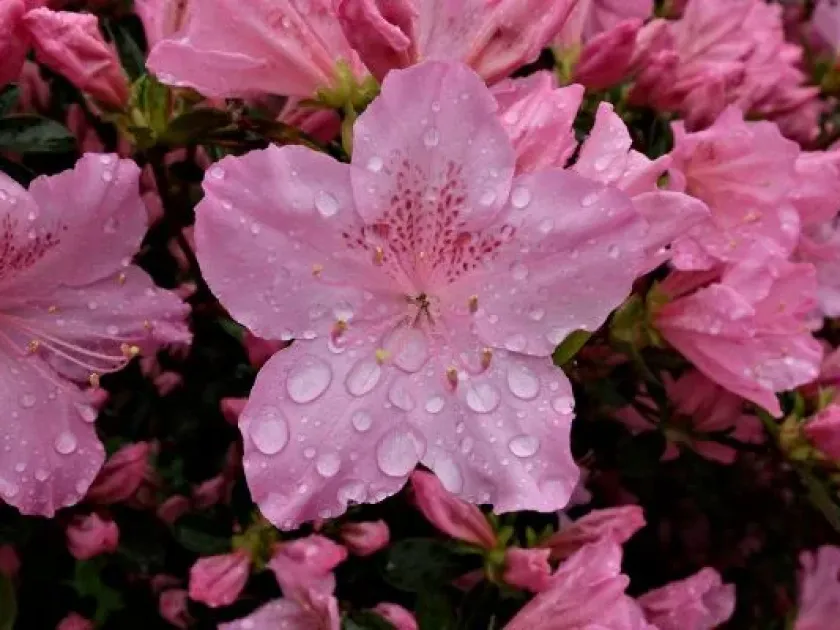
Japanese azalea (Rhododendron obtusum) is a decorative shrub belonging to the Ericaceae family, originating from the mountainous regions of Japan. It is prized for its dense, mounding growth habit and vibrant, profuse flowering during the spring season.
The primary requirement for this culture is acidic soil, with an ideal pH range between 4.0 and 5.5. Growers must use organic, well-draining substrates such as peat moss or pine bark mixes to prevent root rot caused by stagnant water, which the plant is highly sensitive to.
These shrubs thrive in partial shade conditions, protected from direct, intense midday sun. Consistent moisture is vital, and the plant requires regular irrigation with soft, lime-free water to maintain healthy foliage and ensure the development of flower buds for the next season.
Cultivation practices include heavy mulching of the root zone, which helps regulate soil temperature, suppress weeds, and maintain the necessary acidity level. In colder climates, winter protection is necessary to prevent frost damage to the shallow root system.
In terms of agricultural use, Japanese azalea is a key component in ornamental landscaping, rock gardens, and container gardening. Professional nurseries propagate various cultivars to meet the high demand for compact, colorful plants suitable for temperate garden designs.
Main diseases and pests
Common fungal diseases affecting Japanese azaleas include phytophthora root rot, grey mold (Botrytis), and powdery mildew. These issues often arise in environments with poor air circulation or over-saturated soil, leading to rapid decline if left untreated.
Pest pressures are primarily caused by lace bugs, spider mites, and mealybugs. These organisms feed on the underside of leaves, causing discoloration, stippling, and eventual leaf drop, which weakens the shrub and reduces its overall ornamental value.
Integrated pest management is recommended, involving regular scouting of the foliage for early signs of infestation. When detected, systemic insecticides or horticultural oils can be applied to effectively manage pest populations while preserving plant health.
Soil-borne diseases require strict adherence to drainage management and the use of clean, sterile planting media. Fungicide treatments are essential in professional nursery settings to ensure the stock remains free from pathogens during the production cycle.
Proper plant nutrition, specifically using fertilizers formulated for acid-loving plants, strengthens the shrub's natural defense mechanisms. Providing adequate nutrients without adding lime is crucial for maintaining both the physical health and the resistance of the azalea.